by Olivier Bot
The election of the next United Nations Secretary-General in 2026 comes at one of the most critical moments in the organization’s history. Paralyzed by repeated vetoes in the Security Council and facing what the UN Secretariat itself has described as an “existential liquidity crisis,” the UN is struggling to remain relevant in an increasingly fragmented international order.
Although the Secretary-General is often portrayed as the world’s top diplomat, the selection process is above all a geopolitical balancing act. The Security Council must first agree on a single candidate without any veto from its five permanent members—the United States, China, Russia, France, and the United Kingdom—before the General Assembly formally confirms the appointment. In practice, the winner is rarely the most famous candidate, but rather the one acceptable to all major powers.
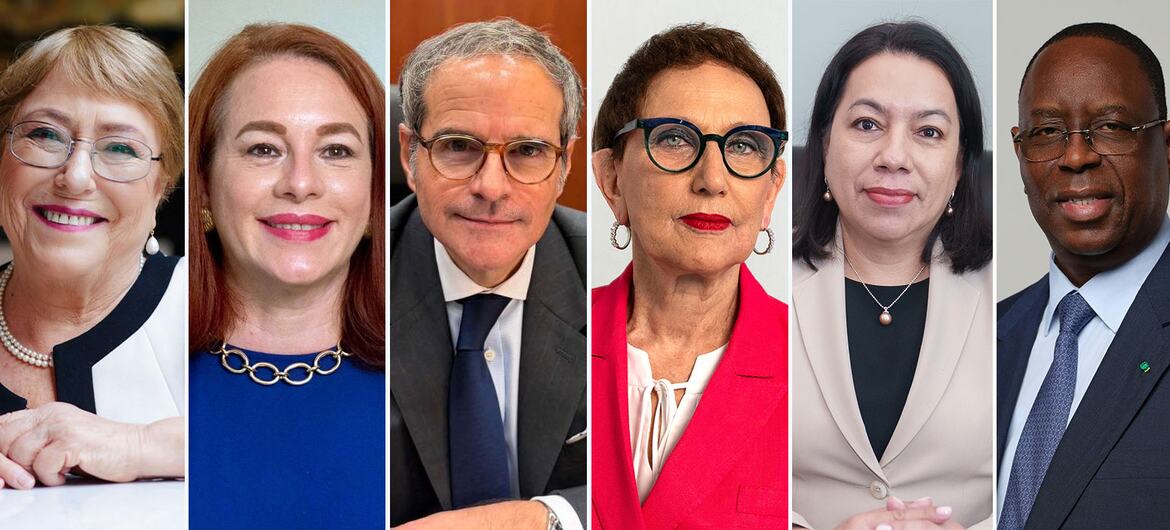
An unwritten tradition of regional rotation favors Latin America and the Caribbean, which have not held the position since Peru’s Javier Pérez de Cuéllar left office in 1991. This explains why most declared candidates come from the region. Among the leading contenders is former Chilean President Michelle Bachelet, whose combination of executive leadership and senior UN experience—including serving as UN High Commissioner for Human Rights—makes her one of the strongest political figures in the race. Costa Rica’s Rebeca Grynspan, currently head of UNCTAD, is widely respected for her expertise in development and multilateral cooperation, while Ecuador’s María Fernanda Espinosa, a former President of the UN General Assembly, is recognized as an experienced consensus-builder. Argentina’s Rafael Grossi, Director General of the International Atomic Energy Agency (IAEA), has earned international visibility through his management of nuclear crises involving Ukraine and Iran. Guyana’s Carolyn Rodrigues-Birkett represents the interests of smaller states confronting climate change and geopolitical instability, although her lower international profile may work against her.
Former Senegalese President Macky Sall is the only African candidate. His experience as head of state and mediator within the African Union gives him considerable diplomatic credibility. However, the regional rotation principle appears to work against him this time, despite his reputation as a skilled negotiator.
The race also raises another historic question: will the United Nations finally elect its first female Secretary-General?Since 1945, every Secretary-General has been a man. Four of the six officially declared candidates are women, and many member states believe the organization should finally break that precedent.
At the same time, some diplomats continue to argue that Eastern Europe deserves the position, as it remains the only major region never to have produced a UN Secretary-General. Two names frequently mentioned are former Estonian Prime Minister Kaja Kallas and former Croatian President Kolinda Grabar-Kitarović. Both possess significant international experience, yet both could face a Russian veto because of their close association with NATO and their firm positions toward Moscow.
Ultimately, this election is about far more than choosing a capable administrator. The next Secretary-General will inherit an organization confronted by major-power rivalry, multiple armed conflicts, declining faith in multilateralism, the rapid rise of artificial intelligence, climate change, and chronic financial pressures. His or her success will depend less on the formal powers granted by the UN Charter than on the ability to restore dialogue among increasingly divided states.
In that sense, the coming diplomatic battle will not simply determine who leads the United Nations. It will reveal whether member states still believe the organization can play a central role in global governance in the twenty-first century.