For years now, Tunisia has largely disappeared from the international spotlight. Fifteen years ago, however, it embodied the greatest democratic hope for the entire Mediterranean region. Today, the country is suffocating under an unprecedented heatwave, much like many other parts of the world. Temperatures are approaching 50°C (122°F) in some areas, while an already fragile power grid has proved unable to cope with soaring demand.
Electricity outages have multiplied across the country. In Tunis, Sfax, Nabeul, Monastir, and the southern regions, entire neighborhoods are regularly left without power for hours at a time. Over the past several days, Tunisia has descended into near-chaos: air conditioners suddenly shut down in extreme heat, businesses are forced to close, telecommunications are disrupted, residents become trapped in stalled elevators, and the authorities now advise people to avoid using elevators during peak electricity consumption.
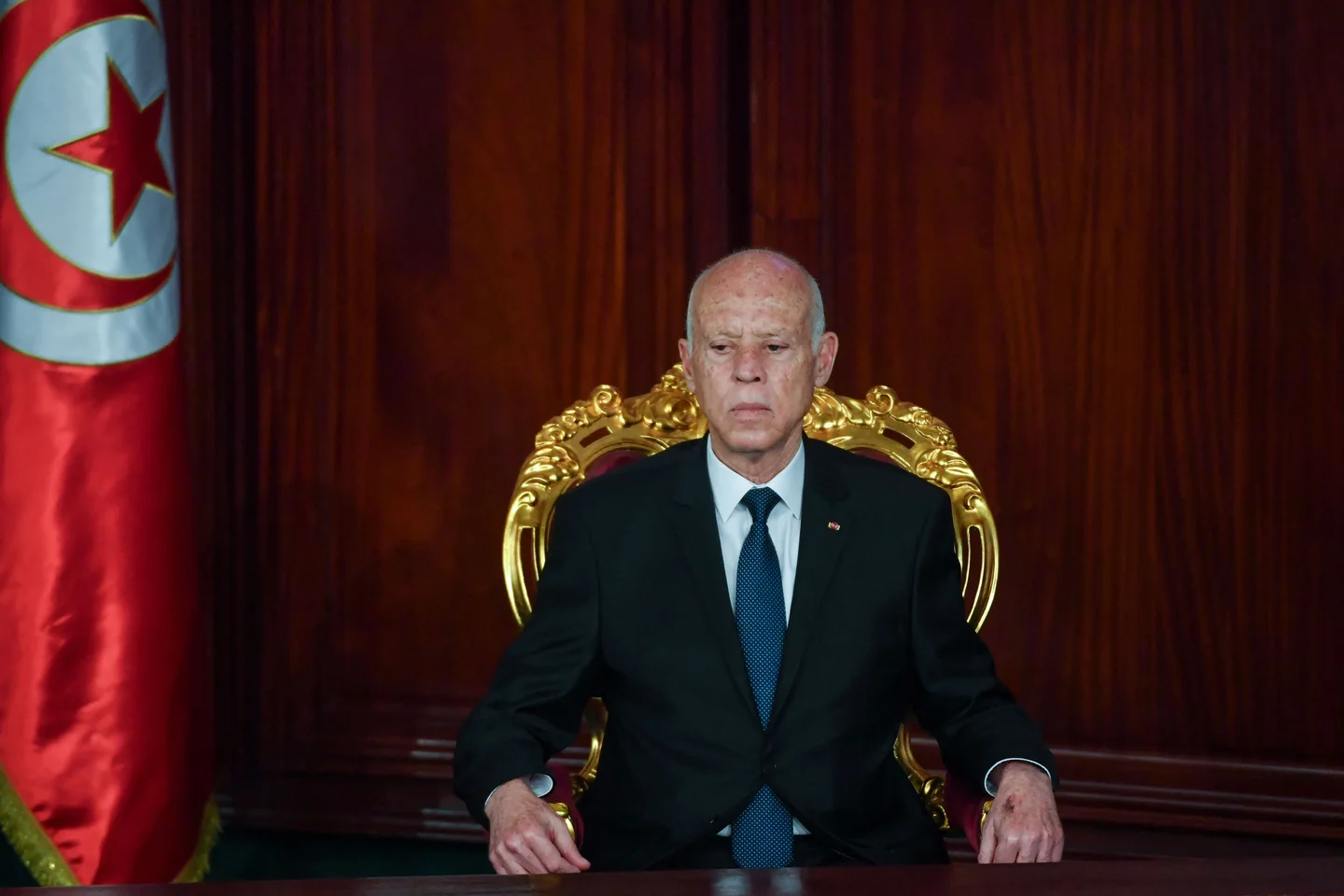
Adding to the crisis are widespread water shortages. As pumping stations themselves lose electricity, thousands of families are left without running water precisely when temperatures are reaching dangerous levels. For many Tunisians, this is no longer merely an energy crisis—it is the daily demonstration of a state that can no longer provide even the most basic public services. More fundamentally, one must ask: what has the Tunisian state actually been able to achieve in recent years? After so many aspirations for modernity, openness, and democracy, a heavy curtain has descended over the country since the arrival of Kaïs Saïed, the new Raïs, who increasingly governs in isolation from the society he claims to lead.
Beyond the weather itself, what truly worries Tunisians is the deteriorating functioning of the state. A population that once embraced democratic change has become silent, exhausted, and stripped of hope. When citizens begin wondering each evening whether they will still have water, electricity, or a functioning telephone network the next day, the crisis has become systemic. Has President Kaïs Saïed now brought Tunisia to the point of no return?
The Great Democratic Hope Has Gradually Faded
The current situation extends far beyond failing infrastructure or an exceptional heatwave. It symbolizes the slow decline of a country that once represented the brightest hope of the Arab Spring.
Fifteen years ago, Tunisia demonstrated that democratic transition in the Arab world appeared possible. A modern constitution, free elections, a relatively independent press, and a vibrant civil society inspired enormous optimism both inside the country and abroad. Yet that optimism has steadily evaporated.
The turning point came on July 25, 2021, when Kaïs Saïed suspended Parliament before dissolving it altogether, began ruling by decree, adopted a new constitution that vastly expanded presidential powers, and progressively marginalized political parties as well as the country’s remaining institutional checks and balances. Opposition figures, journalists, lawyers, and judges increasingly found themselves prosecuted, intimidated, or imprisoned.
Initially, many Tunisians welcomed this consolidation of power. They viewed Kaïs Saïed as an alternative to a deeply divided political class and to the dominance of the Islamist party Ennahda, which many blamed for corruption, unemployment, and economic stagnation. Instead, however, these problems have only worsened.
Replacing a fragile democracy with an almost complete concentration of power has failed to deliver the promised results. Presidential authority has expanded while the state itself has weakened. The economy continues to deteriorate, youth unemployment remains extraordinarily high, many intellectuals and members of civil society have left the country, foreign investment continues to decline, public finances are reaching the breaking point, and essential public services are steadily collapsing.
The country that inspired so much hope in 2011 now stands dangerously close to the abyss. And this time, even the International Monetary Fund may no longer be able—or willing—to rescue it.
The Risk of Another Social Explosion
Tunisia’s recent history has already shown how a revolution can erupt from a single spark. On December 17, 2010, the street vendor Mohamed Bouazizi set himself on fire after municipal authorities confiscated his fruit cart. That desperate act ignited a nationwide uprising.
Revolutions occur when the hardships of everyday life become unbearable. In 2011, Tunisians rose up not only to demand greater political freedom but also to denounce unemployment, corruption, bureaucratic humiliation, regional inequality, and the absence of economic opportunity.
Many of those grievances remain unresolved today. Worse still, they are now compounded by a profound sense of political disillusionment. The democratic institutions that once inspired so much hope have largely been dismantled, while living conditions continue to deteriorate.
No one can predict that another revolution is imminent. Tunisians understand the enormous cost of chaos and, above all, long for stability. But stability that cannot guarantee water, electricity, or economic opportunity cannot indefinitely serve as a political project.
Nor does Kaïs Saïed appear to offer a credible long-term vision beyond silencing dissent. Journalist Mourad Zeghidi has been imprisoned for more than two years and has launched a hunger strike. Activist Chaïma Issa has been arrested, released, and detained once again. Such cases increasingly symbolize the narrowing of Tunisia’s political space.
Tunisia’s tragedy extends far beyond its borders. It serves as a warning for the entire region. The failure of the Arab Spring’s only genuine democratic experiment fuels those who argue that democracy is somehow incompatible with the Arab world. The reality is far more complex. Democracy itself did not fail. Fragile institutions failed. An economy incapable of meeting social expectations failed. More recently, an increasingly authoritarian and predatory concentration of power failed to work alongside a dynamic, educated civil society capable of driving reform. The electricity and water outages of this summer may therefore represent far more than a temporary consequence of an extreme heatwave. They may instead symbolize a country slowly going dark—and perhaps the first warning signs of another popular uprising waiting to emerge.