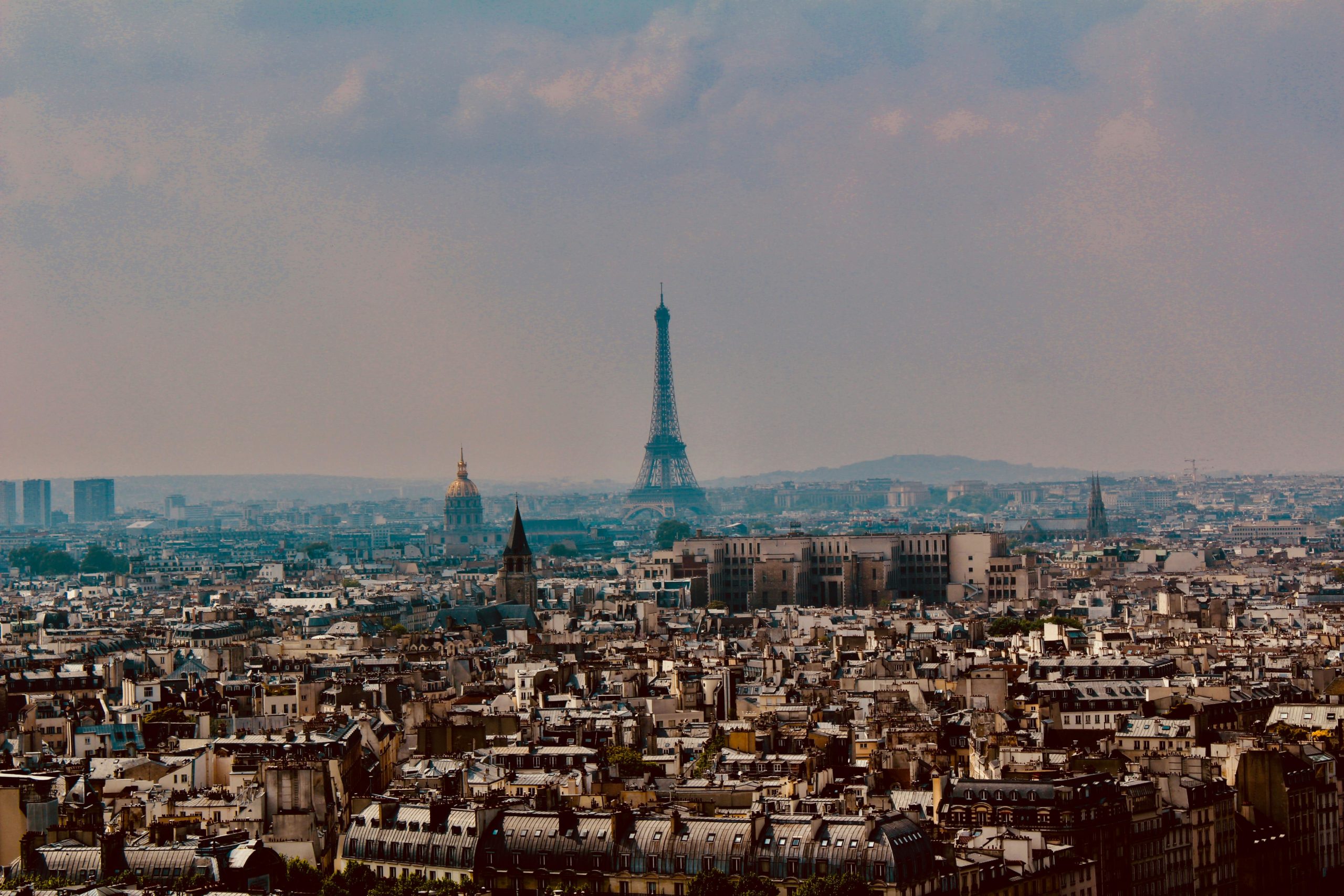
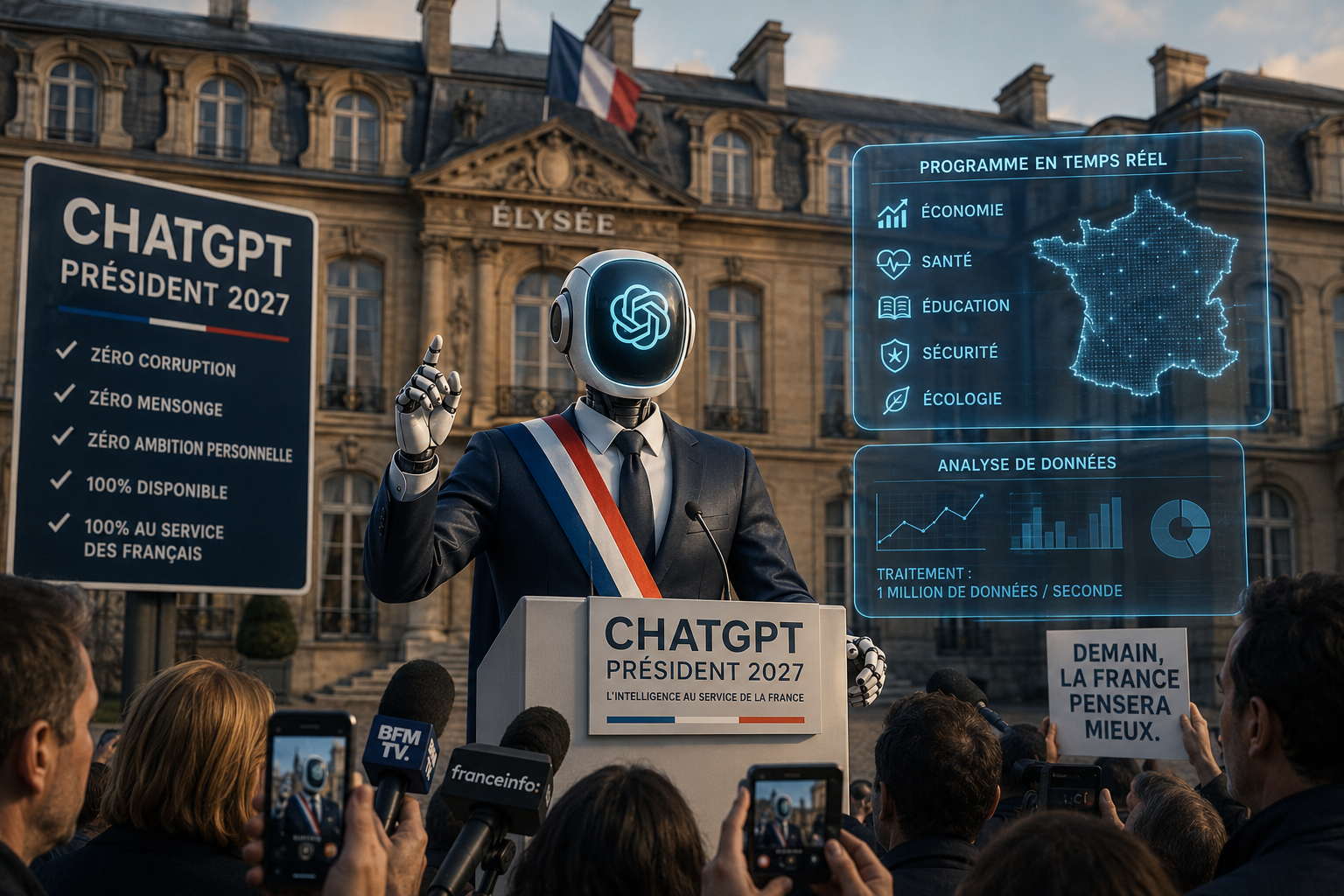
If we are increasingly replacing human judgment with algorithms, why not go one step further and entrust the Republic itself to artificial intelligence? Given the growing list of declared presidential candidates—none of whom seems to inspire much enthusiasm, consensus, or exceptional leadership—could our unexpected savior be the one nobody imagined: a digital messiah?
The idea is deliberately provocative, especially at a time when French politics has become saturated with presidential ambitions. Since we already ask artificial intelligence to write our speeches, reassure us, guide our decisions, draft our résumés, cover letters, academic essays, business strategies, love letters, and even legal arguments in divorce proceedings, why continue electing a flesh-and-blood president who is incapable of doing all of that simultaneously?
After all, ChatGPT already possesses several qualities that have become remarkably rare in politics. It does not embezzle public funds. It does not create fake jobs. It has no shadow advisers, no secret offshore bank accounts, no corruption scandals, no sexual misconduct allegations, no embarrassing videos waiting to resurface a decade later. No risk of seeing it photographed aboard a billionaire’s yacht the day after an election—or caught sneaking off on a scooter to visit a mistress.
Better still, it knows every political manifesto by heart. From Jean-Luc Mélenchon to Marine Le Pen, from Gabriel Attal to Édouard Philippe—and indeed every other candidate—it can summarize each platform within seconds. No human politician can honestly claim the same.
It works twenty-four hours a day, never takes presidential vacations, never misses an international summit, and can instantly answer questions from diplomats, ministers, or world leaders. True, it tends to qualify every answer. Sometimes excessively. But isn’t that precisely what most politicians already do?
Why spend six months campaigning and millions of euros on elections when an algorithm could generate, in seconds, a platform designed to satisfy retirees, farmers, entrepreneurs, environmentalists, hunters, civil servants, and urban cyclists alike? A perfectly balanced program—therefore, perhaps, a completely unworkable one. The obvious solution would simply be to appoint AI-powered prime ministers and cabinet ministers to implement it.
Televised debates would become fascinating spectacles. Faced with journalists, ChatGPT would calmly reply, “Your question is complex and deserves a nuanced answer.” Exactly like every candidate today—only with considerably more patience and courtesy. It would probably take much longer before authorizing a nuclear strike, carefully evaluating every conceivable option, even the least likely ones. Political rallies would also become far less expensive. No more rented arenas or buses bringing supporters from across the country. A software update would suffice.
The Prime Minister? An extension.
The government spokesperson? A notification.
The Constitutional Council? A pop-up window asking: “Are you sure you want to promulgate this law?”
Behind the joke, however, lies a far more serious question.
What do we still genuinely expect from a President?
Is it not increasingly outdated to place the nation’s destiny in the hands of one individual when so few inspire genuine confidence? Economic policy is largely dictated by financial markets. Monetary policy belongs to the European Central Bank. An ever-growing share of legislation originates in Brussels. Budgetary, legal, and international constraints continue to narrow the room for maneuver of national governments. Heads of state promise to transform their countries, yet increasingly govern within frameworks they no longer fully control. Ironically, perhaps artificial intelligence could even help restore some of the sovereignty that human leaders—particularly in Europe—have gradually surrendered.
Election campaigns have also become strikingly repetitive. Faces change. Posters change. Slogans evolve. Yet the programs increasingly converge. Nearly everyone promises more security, slightly lower taxes, greater purchasing power, “controlled” immigration, a “pragmatic” ecological transition, and a more efficient state. Differences certainly remain, but politics increasingly resembles administration rather than transformation.
So why stop with France? If European states possess ever more limited sovereignty and shrinking political autonomy, a supranational artificial intelligence could almost administer the continent. The same algorithmic architecture—adjusted only for each country’s economic, cultural, and social characteristics—could govern France, Germany, Italy, or Spain through different national settings. Annual software updates might eventually replace electoral alternation. Of course, no one seriously wishes to hand democracy over to a machine.
But one must ask what our democracies have themselves become: sluggish growth, declining voter turnout, increasingly disappointing political outcomes. As for foreign interference, one might argue that an AI president would be remarkably resistant to manipulation. If this thought experiment suddenly seems less absurd than it ought to, perhaps it is because our political systems have gradually evolved into vast exercises in communication, optimization, and constraint management.
The real danger is not that artificial intelligence may one day replace political leaders. It is that political leaders have already begun thinking, speaking, and sometimes governing like algorithms. And perhaps that, more than anything else, is the clearest symptom of the democratic exhaustion now confronting Europe. Human politics may have reached the end of one historical cycle, while the age of intelligent machines is only just beginning.