Voici la traduction en anglais.
By Arthur Martin, AI entrepreneur, and Sébastien Boussois, political scientist
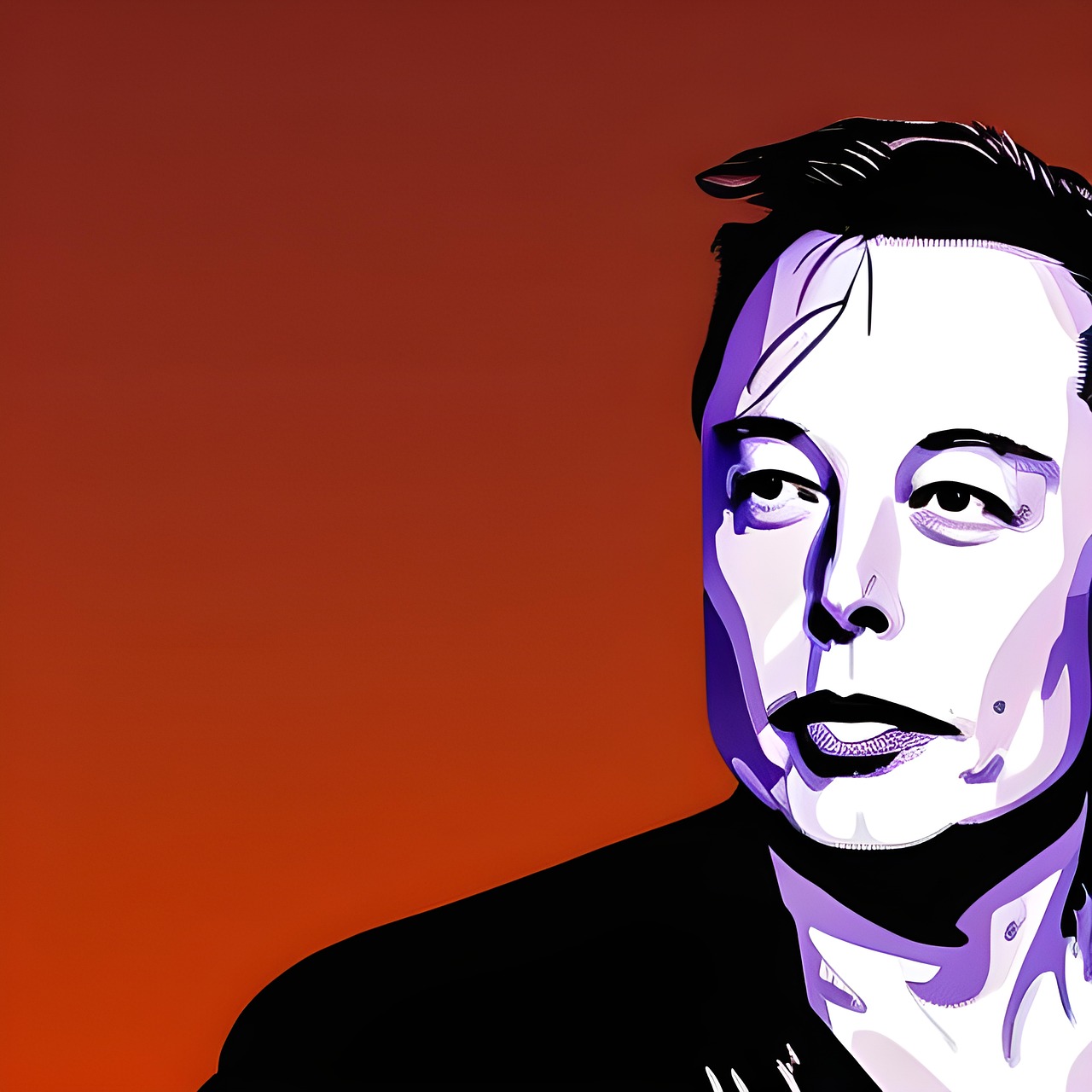
Over the past few years, Elon Musk has become the favorite punching bag of a large segment of the Western media. Whatever the topic of the interview—innovation, space exploration, artificial intelligence, or industry—the conversation quickly shifts into a political interrogation, where journalists seem more interested in uncovering a moral failing than in understanding one of the defining figures of our time. Yet Musk is undeniably a genius, an inventor, and above all, a visionary.
His recent interview with The Economist provides yet another illustration. From the opening questions, the tone is set: Musk is treated as a suspect, compelled to justify himself, explain his opinions, and respond to what feels more like a prosecution than an interview. Nuance is irrelevant; explanation is secondary. He is summoned before the court of political correctness. Despite her distinguished career at the IMF, advising finance ministers around the world, and serving as Editor-in-Chief of The Economist since 2015, Zanny Minton Beddoes could not resist trying to “take down” the world’s richest man.
There is another reality that is too often overlooked: today, Elon Musk does not need journalists to remain relevant. More often than not, it is journalists who need Elon Musk. Interviewing him has become an opportunity to enjoy a “fifteen minutes of fame,” generate viral headlines, and produce clips that spread across social media. The media value of such interviews rests primarily on Musk himself. That is precisely why some interviewers seem far more interested in delivering a memorable “gotcha” moment than in genuinely understanding the person sitting across from them.
One can disagree with Elon Musk without resorting to this constant caricature. Yes, he is provocative. Yes, he tweets too quickly. Yes, he thrives on controversy and sometimes appears to treat X as the world’s largest pub conversation. Yes, he occasionally says things that are remarkably ordinary. But reducing such a complex figure to a handful of controversial statements is intellectually lazy.
Whether one admires him or not, Elon Musk is undoubtedly one of the greatest industrial entrepreneurs in modern history. He transformed electric vehicles from an ambitious niche into a mass-market industry, making the Tesla Model Y the world’s best-selling car when most observers considered the idea unrealistic. Through SpaceX, he revolutionized space exploration by achieving what many public agencies had failed to accomplish: landing reusable rockets, dramatically reducing launch costs, and restoring America’s independent access to space. Starlink has proven invaluable both in war zones and in the aftermath of natural disasters. Neuralink and Optimus may ultimately succeed—or they may not—but they are already pushing the boundaries of what humanity considers technologically possible.
One only has to revisit a tweet Musk published in 2020, shortly after GPT-3 was unveiled. He wrote: “GPT-3 is scary good. We are not far from dangerously strong AI.” At the time, many dismissed the remark as yet another exaggeration from the billionaire. Two years later, ChatGPT transformed the world, reshaping work, education, research, and the global economy while triggering an international race in artificial intelligence. Musk, one of OpenAI’s co-founders before leaving the organization, had recognized long before many others that large language models would become one of the most disruptive technologies of the twenty-first century. Once again, he saw the coming shock before almost everyone else.
None of this suggests that Musk acts alone or that he is some solitary hero. Many of his companies benefited from government subsidies, federal contracts, and support from the U.S. government. SpaceX would never have reached its current scale without contracts from NASA and the Pentagon. Tesla also benefited from public incentives. But that is precisely where Musk’s genius lies. He did not invent every technology by himself. Rather, he mastered the art of mobilizing available resources, attracting the world’s best engineers, and executing faster than either traditional corporations or public bureaucracies could ever manage. As he often says in interviews, a company must operate in a permanent state of urgency.
Perhaps that is what troubles people the most. Elon Musk embodies a form of hyper-capitalism in which a single entrepreneur can sometimes wield more influence than entire governments. Such concentration of power naturally raises legitimate democratic questions. Those questions deserve serious debate. But they do not justify the relentless campaign of vilification that often surrounds him.
By constantly trying to lecture Musk, some journalists end up producing the opposite effect of what they intend. When an interview resembles a courtroom prosecution rather than a search for truth, it is ultimately the journalist—not the interviewee—whose credibility suffers. Audiences are not looking to be told what they should think about Elon Musk. They want to understand him in all his complexity.
There is, however, one area where Musk was right to step back: politics. His direct involvement in partisan debates blurred his public image and weakened his authority as an industrial leader. Designing rockets, reinventing the automobile, or connecting the planet plays to his extraordinary strengths. Politics is an entirely different profession, governed by different rules, compromises, and skills. It was clearly not his natural arena.
Elon Musk is neither a saint nor a villain. He is an extraordinary figure—sometimes infuriating, often unpredictable, but unquestionably one of the greatest entrepreneurs and visionaries of our age. He may well represent the most spectacular embodiment of contemporary technological capitalism, with all its excesses, contradictions, and brilliance.
Fifty years from now, people will still be talking about SpaceX, Tesla, Starlink, reusable rockets, the democratization of electric vehicles, and Musk’s early understanding of the artificial intelligence revolution. It is far less certain that anyone will remember the names of those who built their reputations by trying to embarrass him during a single interview.
History is rarely written by commentators. More often, it is written by those who fundamentally alter the trajectory of the world—for better or for worse. Elon Musk is far from perfect. He makes mistakes, delights in provocation, and some of his political positions are legitimately open to criticism. None of that, however, should obscure the obvious: he already belongs to the very small circle of individuals who have profoundly shaped the course of their era. That is why he will continue to be studied, admired, and criticized long after today’s controversies have faded into history.