The Qatari Paradox: How Doha Became an Indispensable Player in the Middle East

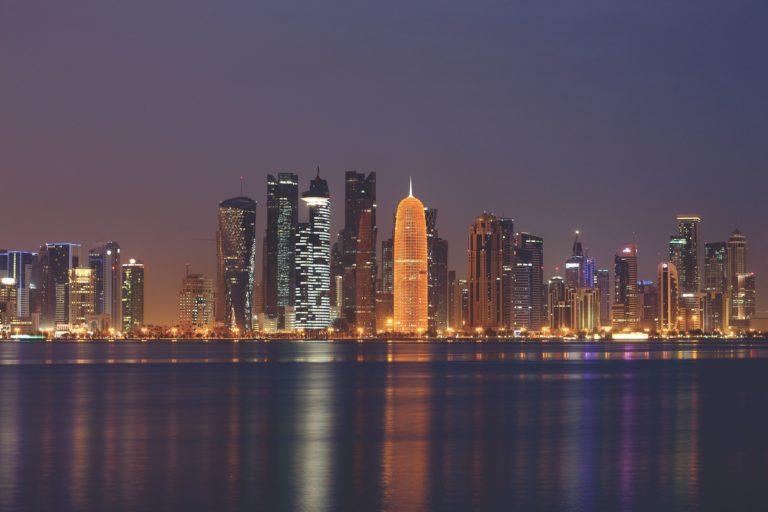
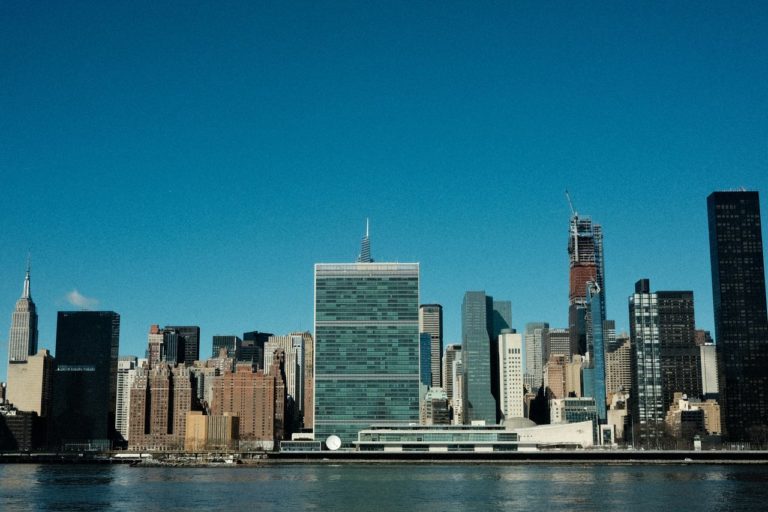
Vibrant night skyline of Doha, Qatar reflecting on the water, showcasing illuminated skyscrapers.

By Jean-René Belliard

Gas, diplomacy, finance, security, mediation, and media influence: over three decades, Qatar has methodically built the instruments of a power that far exceeds its territory and population. What may look like a series of contradictions is, in reality, a remarkably coherent strategy.

The indirect negotiations between the United States and Iran, organized several times in Doha, illustrate the singular role Qatar now occupies in the Middle East. For years, the emirate has emerged as a sought-after interlocutor whenever traditional diplomatic channels reach an impasse.

That position fascinates as much as it raises questions. How did such a small state become an indispensable partner for Washington while maintaining an active dialogue with Tehran? How does Qatar host the most important U.S. military base in the region while sharing with Iran the largest natural gas field in the world? And why is Doha so often called upon to facilitate negotiations between actors that refuse to speak directly to one another?

These apparent contradictions have given rise to what could be called the “Qatari paradox.” Yet they are neither accidental nor merely ambiguous. They belong to a long-term strategy, built on the methodical combination of several instruments of power: energy, finance, security, diplomatic mediation, and media influence.

To understand Doha’s place in today’s regional order, one must go back to the foundations of this strategy and follow, step by step, the way Qatar turned its constraints into levers of influence.

Geography as Destiny

Few states have seen their foreign policy shaped as deeply by geography as Qatar. This small peninsula, extending into the waters of the Gulf, has only one land border, with Saudi Arabia. Its immediate proximity to Iran, across the Gulf, places it at the heart of a space where the Middle East’s major strategic rivalries have been concentrated for decades.

This geography could have turned Qatar into a passive spectator of regional power struggles. Instead, it pushed Doha early on to seek ways to preserve its autonomy in the shadow of neighbors far larger and more powerful than itself.

The first of these assets lies beneath its territorial waters.

Gas as the Foundation of Qatari Power

Qatar shares with Iran the largest natural gas field in the world. Exploited as the North Field by QatarEnergy and as South Pars on the Iranian side, this vast reservoir forms the foundation of the emirate’s prosperity.

This energy wealth has deeply transformed the country. In a few decades, Qatar became one of the world’s leading exporters of liquefied natural gas, or LNG, providing the state with considerable revenues and the financial means to pursue a particularly ambitious foreign policy.

But the gas rent has also created a strategic constraint. The development of the field depends on the stability of relations between Doha and Tehran. Although the two countries are rivals on some regional issues, they remain co-owners of this exceptional resource. Neither has an interest in seeing that shared asset placed under lasting threat.

Turning Wealth Into Power

Owning vast natural resources is not enough to turn a state into a durable power. History is full of hydrocarbon-rich countries that never managed to convert that rent into political or economic influence. Qatari leaders understood early on that the real wealth did not lie in gas itself, but in the ability to turn the revenues it generates into instruments of power.

It was in this spirit that the Qatar Investment Authority, or QIA, was created. Its purpose goes far beyond the pursuit of financial returns. It is one of the main tools of the emirate’s long-term strategy.

Fueled by LNG revenues, the QIA has built a portfolio of investments across several continents. Real estate, infrastructure, industry, finance, new technologies, hospitality, and luxury goods all form part of this diversification. The objective is twofold: to prepare for the post-hydrocarbon era while strengthening Qatar’s economic presence within the world’s leading economies.

This strategy also produces a political advantage. By becoming a major investor in many countries, Doha creates lasting relationships that extend beyond energy. The economic interests built on both sides help reinforce political dialogue and give Qatar a level of visibility entirely disproportionate to its territory.

The emirate is therefore not merely accumulating assets. It is investing in economies, partnerships, and influence networks that gradually consolidate its place on the international stage.

This approach illustrates a constant feature of Qatari policy: every resource must serve a strategic objective. Gas revenues feed investment; investment strengthens influence; influence contributes to the security of the state.

Qatar did not simply benefit from its energy wealth. It methodically transformed it into durable power.

Securing Independence

Wealth and international investments alone cannot guarantee the security of a state. Qatari leaders understood this fully. In a region shaped by power rivalries, political independence could not be preserved without a credible military guarantee.

This is why Doha gradually strengthened its strategic cooperation with the United States. The establishment of Al Udeid Air Base, which became the most important U.S. military installation in the Middle East, is one of the pillars of this relationship. Beyond its operational role, this presence carries political weight: any major threat against Qatar would risk directly involving Washington.

For Doha, this alliance was not merely a diplomatic choice. It answered an existential concern. As a small state surrounded by more powerful neighbors, Qatar had to make clear that any challenge to its sovereignty would carry a significant strategic cost for any potential aggressor.

This guarantee proved particularly valuable during the 2017 crisis. The blockade imposed by Saudi Arabia, the United Arab Emirates, Bahrain, and Egypt showed that regional tensions could quickly call established balances into question. Although the crisis did not lead to military intervention, it demonstrated that Qatar’s independence remained a sensitive issue for several of its neighbors.

The strongest protection, however, did not lie only in the presence of American forces on Qatari soil. It also rested on Qatar’s ability to convince its partners that its stability was a shared interest. The more the emirate developed economic, diplomatic, and military relationships with international partners, the higher the political cost of destabilizing it became.

As noted earlier, Qatar shares with Iran the largest natural gas field in the world. This geological reality imposes a form of strategic coexistence on both countries. Despite their differences over several regional files, Doha and Tehran both have every interest in preserving a minimum level of stability in the Gulf in order to guarantee the exploitation of this essential resource.

This subtle balancing act gradually became the hallmark of Qatari diplomacy.

Becoming Indispensable to Survive

Once its independence was secured, Qatar still had to answer another question: how can a small state exert lasting influence over major regional crises?

Doha gradually found the answer not by trying to rival the great powers, but by becoming indispensable in their eyes. For a small state, influence can be as effective a form of protection as military power.

This strategy led Qatar to develop a diplomacy based on mediation. The emirate gradually established itself as an intermediary capable of keeping open channels of communication between actors that refused direct contact.

This position did not result from absolute neutrality. It was a pragmatic choice. By maintaining working relationships with states and movements whose interests are sometimes irreconcilable, Doha gave itself the means to intervene when traditional diplomatic paths reached an impasse.

Whether in negotiations with the Taliban, indirect contacts between the United States and Iran, discussions over hostages held in Gaza, or other regional crises, Qatar has gradually become a necessary passage point when conventional diplomatic channels no longer make progress possible.

This function goes far beyond diplomatic prestige. The more Qatar becomes indispensable to the management of regional crises, the more it strengthens its own security. A recognized mediator is an actor that everyone hesitates to marginalize.

Becoming indispensable was therefore not a diplomatic ambition. It was a survival strategy.

The Limits of the Model

However coherent it may be, the Qatari strategy is not without risk. By seeking to maintain dialogue with all actors, Qatar inevitably exposes itself to criticism from those who interpret these relationships as a form of political or ideological proximity.

Its role as mediator has led it to be accused, in turn, of being too close to Washington, too conciliatory toward Tehran, or too open to certain Islamist movements. These criticisms are the counterpart to what makes Qatari diplomacy distinctive: its ability to maintain channels of communication with actors that others refuse to meet.

The diplomatic crisis of 2017, marked by the blockade imposed by Saudi Arabia, the United Arab Emirates, Bahrain, and Egypt, illustrated the tensions that this policy of autonomy could generate. More recently, controversies linked to the presence in Doha of officials from certain Palestinian movements have shown again that a mediation strategy inevitably exposes a state to diplomatic pressure, influence campaigns, and attempts to undermine its credibility.

Qatar nevertheless appears to consider these risks the price to pay for preserving its freedom of action. To stop talking to certain actors would, in its view, mean losing precisely what gives it diplomatic value: the ability to keep channels of communication open when others are broken.

This is probably the most singular feature of Qatari diplomacy. In a region where alliances are often exclusive, Doha has chosen to maintain relations with actors that sometimes oppose one another directly. It is a difficult strategy to sustain, but it largely explains the place the emirate occupies today on the regional and international stage.

Shaping the Narrative

In the twenty-first century, the power of a state is no longer measured only by its military capabilities, its economy, or its diplomacy. It also depends on its ability to influence perceptions, shape debates, and impose its own narratives on the international stage.

Qatar understood this shift early. By creating Al Jazeera in 1996, Doha did not simply launch a news channel. The emirate gave itself an instrument of influence capable of reaching tens of millions of viewers far beyond its borders.

With a freer tone than many Arab state television channels of the time, continuous coverage of regional news, and its international development, Al Jazeera gradually became one of the main media outlets in the Arab world and later a reference watched in many capitals.

This success, however, has been accompanied by permanent controversy. Several Arab governments have accused the network of giving a platform to movements or figures they consider hostile to their interests. Others have denounced what they see as proximity to the Muslim Brotherhood, while Qatari authorities have always maintained that the channel’s editorial line reflects journalistic independence.

Beyond the controversy, one fact stands out: Al Jazeera profoundly changed the media landscape of the Arab world. For the first time, a media outlet based in a small Gulf monarchy was able to influence regional debates and be followed by major international decision-makers.

As with energy, finance, security, and mediation, Qatar turned information into an instrument of power. In a world where perceptions often influence political decisions as much as military balances do, having a media outlet with global reach has become a strategic asset.

No other Arab state of comparable size has managed to build a media tool with such international reach. Once again, Doha transformed a structural weakness into a lever of power.

Conclusion

It is precisely from these apparent contradictions that the “Qatari paradox” was born. Yet this analysis shows that they reflect less ambiguity than a coherent strategy, pursued with remarkable consistency for more than three decades.

Qatar has never sought to rival the great powers on the military level. Instead, it chose to methodically develop several instruments of power – energy, finance, security, mediation, and information – in order to offset the vulnerabilities created by its geography and demography.

The paradox, therefore, was only apparent. Each of these choices belongs to the same logic: preserving the emirate’s independence by becoming an actor no regional or international protagonist can easily do without.

Beyond Qatar itself, this strategy illustrates the changing nature of power in the twenty-first century. In a world where influence no longer rests solely on military capabilities, a small state can acquire diplomatic weight far beyond its territory, provided it can coherently combine its resources, alliances, diplomacy, and ability to shape perceptions.

Further Reading

  • Oman: Neutrality as a Strategy of Power Shaped by History and Ibadism

Because it shows another way for a small Gulf state to turn geographic constraints into an instrument of power.

  • Balochistan: Why This Province Has Become One of the New Centers of Gravity in Global Geopolitics

This article extends the discussion of energy issues, strategic corridors, and regional rivalries around the Gulf.

  • Turkey, Syria, Israel: The New Strategic Balances of the Levant

It allows the reader to broaden the analysis to the strategic recompositions reshaping the wider Middle East.

Keywords

  • Qatar
  • Doha
  • Middle East geopolitics
  • Soft power
  • Qatari mediation
  • Al Jazeera
  • Qatar Investment Authority (QIA)
  • North Field
  • South Pars
  • Liquefied natural gas (LNG)
  • Al Udeid Air Base
  • Qatari diplomacy

Related Posts

Latest Posts

Scroll to Top