By Jean-René Belliard
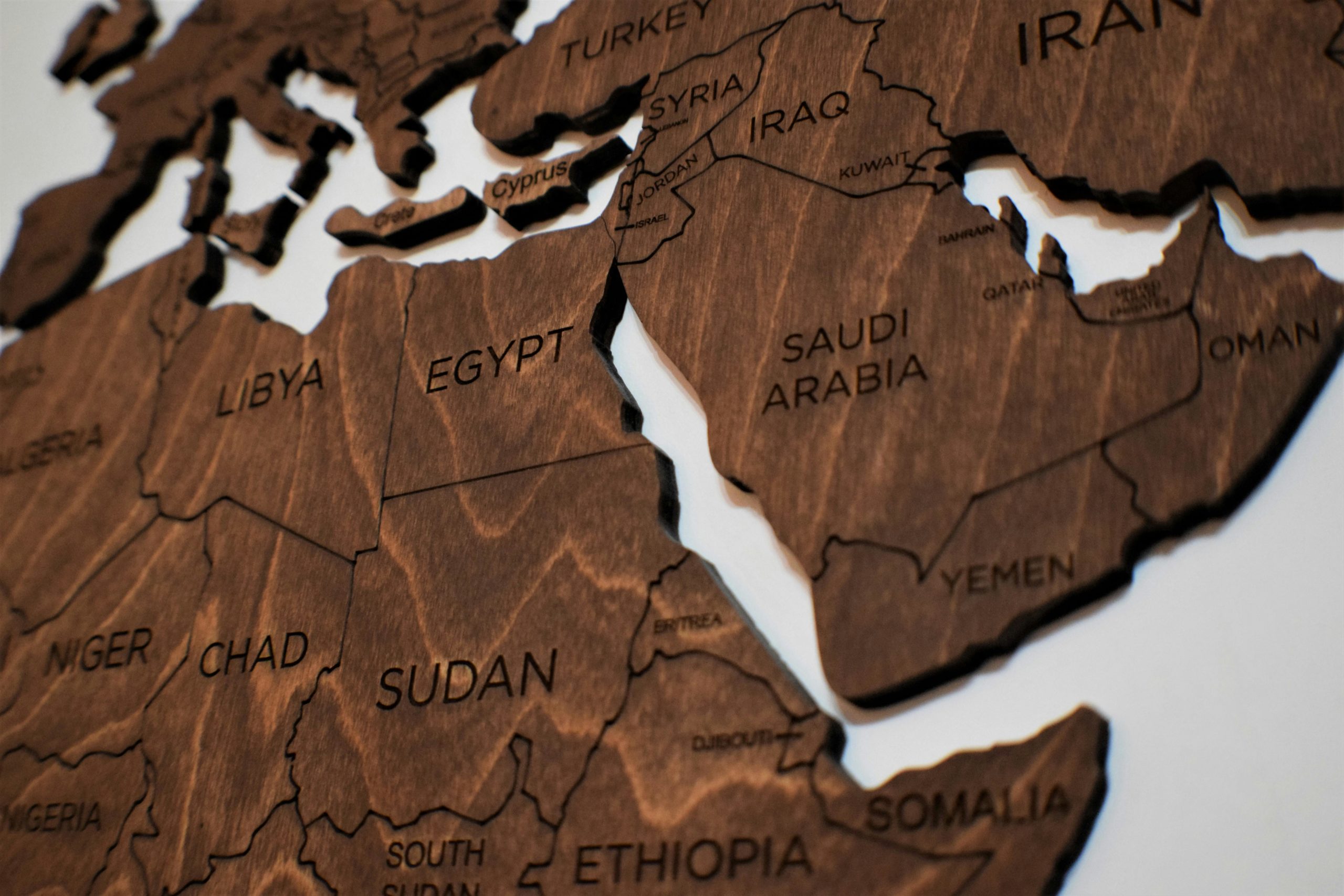
Energy, infrastructure, diplomacy, strategic partnerships and emerging trade routes: in just two decades, China has established itself as an indispensable player in the Middle East. Without relying on the vast network of military alliances built by the United States, Beijing has steadily expanded its influence through economic power, massive investments and a pragmatic diplomacy capable of engaging with actors that are often bitter rivals. From the Persian Gulf to the Eastern Mediterranean, via Pakistan, Israel and Turkey, China is helping reshape the geopolitical balance of the twenty-first century.
For decades, the Middle East was one of the strongest pillars of American influence. Through military deployments, security partnerships and direct interventions, Washington played a dominant role in regional affairs. Since the beginning of the century, however, another power has gradually advanced its interests across the region: China. Initially driven by its growing energy needs, Beijing has developed a far more ambitious strategy combining trade, investment, diplomacy and security cooperation. Its objective is straightforward: secure energy supplies, protect commercial routes and reinforce its position as a global power.
Energy at the Heart of China’s Regional Strategy
The Middle East remains essential to China’s energy security. As the world’s largest oil importer, China depends heavily on hydrocarbons from Saudi Arabia, Iraq, Iran, the United Arab Emirates and Kuwait. This explains Beijing’s strong interest in regional stability. Any prolonged disruption of the Strait of Hormuz would have immediate consequences for the Chinese economy.
To safeguard its energy imports, China has cultivated close ties with virtually every major producer in the region, regardless of ideology or political alignment. This pragmatic approach allows Beijing to maintain constructive relations with countries that often stand on opposite sides of regional disputes.
The Belt and Road Initiative as a Strategic Framework
The Belt and Road Initiative (BRI) remains the central instrument of China’s expansion in the Middle East. Ports, railways, power plants, industrial zones and digital infrastructure form a vast network connecting China to markets across Asia, Africa and Europe. These investments provide modernization opportunities for regional states while simultaneously expanding Beijing’s economic influence.
Beyond infrastructure, China is increasingly active in high technology, telecommunications, artificial intelligence and renewable energy. The goal is not merely commercial expansion but long-term integration into regional economies while securing the trade routes that sustain Chinese prosperity.
Pakistan: China’s Strategic Pivot
Among all of Beijing’s regional partners, Pakistan occupies a unique position. The China-Pakistan Economic Corridor (CPEC), one of the flagship projects of the Belt and Road Initiative, connects China’s Xinjiang province to the Arabian Sea and offers direct access to the Indian Ocean.
For Chinese leaders, Pakistan is far more than an economic partner. It is a strategic pillar in a broader effort to diversify trade routes and reduce dependence on traditional maritime chokepoints. Cooperation extends well beyond infrastructure into military, technological and diplomatic fields, making Pakistan one of China’s closest strategic allies in Asia. At the center of this partnership lies the port of Gwadar, located near the Gulf of Oman and major global energy routes. Officially a commercial hub, Gwadar also holds significant strategic value, strengthening China’s maritime presence near the Middle East while facilitating the movement of goods and energy supplies.
Balancing Regional Rivals
One of China’s greatest diplomatic strengths lies in its ability to engage simultaneously with competing powers. Beijing maintains strong relations with Gulf monarchies while also developing a strategic partnership with Iran. This balancing strategy allows China to preserve economic interests across the region without becoming entangled in ideological rivalries.
The Chinese-mediated restoration of diplomatic relations between Saudi Arabia and Iran in 2023 marked a significant milestone in Beijing’s regional diplomacy. The agreement enhanced China’s image as a stabilizing actor capable of facilitating dialogue in a region often defined by conflict and competition. Unlike the United States or several European powers, China presents itself as a pragmatic partner focused on stability rather than political alignment.
Israel and the Diplomatic Advantage
The Israeli-Palestinian issue represents another important dimension of China’s regional strategy. Unlike Washington, whose alliance with Israel remains a cornerstone of its Middle East policy, Beijing seeks a more balanced position. China maintains significant economic and technological ties with Israel while simultaneously supporting the creation of a Palestinian state and regularly advocating negotiated solutions.
This approach provides China with a diplomatic advantage across much of the Arab and Muslim world. While the United States is frequently perceived as firmly aligned with Israel, Beijing appears as a partner capable of maintaining dialogue with all sides. Although this does not grant China the same security influence as Washington, it strengthens its political credibility throughout the region.
Turkey: Partner and Competitor
China must also contend with Turkey’s growing influence. While economic relations between Beijing and Ankara remain substantial, both powers increasingly compete in strategic regions stretching from Central Asia to the Middle East.
Central Asia represents the primary arena where Chinese and Turkish interests intersect. China views the region as a critical component of the Belt and Road Initiative and invests heavily in infrastructure, energy and transportation projects. Turkey, meanwhile, leverages historical, linguistic and cultural ties with Turkic-speaking nations to expand its own influence. Competition remains largely economic and diplomatic, with China benefiting from immense financial resources and Turkey from strong cultural connections.
The Uyghur issue remains a sensitive subject in bilateral relations. However, Turkish authorities have generally adopted a more cautious approach in recent years to avoid jeopardizing economic ties with Beijing.
A Limited but Growing Military Presence
Despite its expanding economic and diplomatic influence, China’s military footprint in the Middle East remains relatively limited. Its only officially recognized overseas military base is located in Djibouti at the entrance to the Red Sea. Operational since 2017, the facility supports naval operations, protects trade routes and contributes to anti-piracy missions.
China has also expanded military cooperation with several regional partners, particularly Pakistan, while maintaining security dialogue with Iran. Nevertheless, Beijing continues to prioritize the protection of economic interests rather than pursuing a military presence comparable to that of the United States.
Toward a More Multipolar Middle East
China’s growing influence does not signal the disappearance of American power. The United States retains unmatched military capabilities, extensive alliances and a dominant security role across much of the region. Yet the rise of China is gradually reshaping the strategic landscape. Middle Eastern states now possess a credible economic, technological and diplomatic alternative to traditional Western partnerships.
Through its economic strength, massive investments, strategic partnership with Pakistan and ability to engage simultaneously with Israel, Iran, Turkey and the Arab world, Beijing has become an essential actor in Middle Eastern affairs. The question is no longer whether China has become influential in the region, but how far that influence will extend in the coming decades.
Amid tensions between Israel and Iran, Turkey’s regional ambitions, the economic transformation of Gulf monarchies and the intensifying rivalry between Beijing and Washington, China increasingly appears as one of the principal architects of the new geopolitical order emerging across the Middle East.