by Nawaf Naman
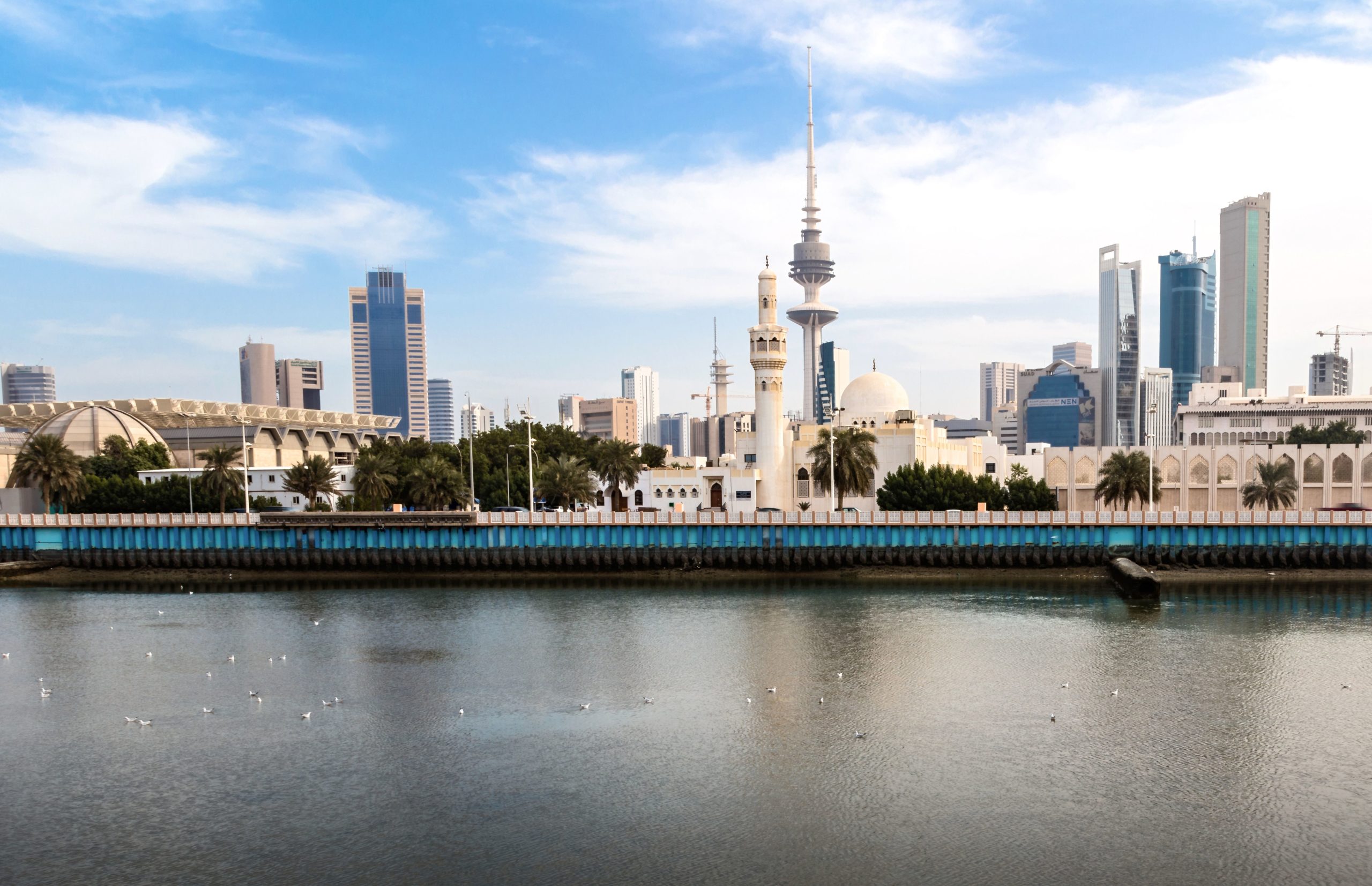
U.S. Secretary of State Marco Rubios visit to Kuwait was far more than a routine diplomatic stop during his tour of the Gulf. By its timing and the messages it conveyed, the trip carried strategic significance well beyond bilateral relations between Washington and the member states of the Gulf Cooperation Council (GCC). It came only days after the end of hostilities between the United States and Iran, as both sides prepared to resume technical negotiations amid growing questions about the future security architecture of the Gulf in the post-war environment.
From Kuwait, Rubio delivered an unequivocal message to America’s regional partners. He stated that Washington “will make no decision that compromises the security of its Gulf allies” and pledged that the United States would remain “fully coordinated with its Gulf partners” in any future understanding with Iran. He also confirmed that technical talks between Washington and Tehran would resume later this month, reportedly in Switzerland, although no official venue has yet been confirmed.
These statements demonstrate that the U.S. administration understands that any future agreement with Iran will not be judged solely on nuclear restrictions or sanctions relief. Its success will also depend on reassuring Gulf states that their security interests will not become bargaining chips and that any rapprochement with Tehran will not come at the expense of the region’s strategic balance.
From War to the Battle for a New Regional Order
Although the preliminary agreement between Washington and Tehran brought four months of conflict to an end, it left unresolved the most sensitive issue of all: the future of the Strait of Hormuz.
The central question is no longer simply how to prevent another war, but who will ultimately shape the governance of one of the world’s most strategic maritime chokepoints. Will the long-standing principle of freedom of navigation remain intact, or has the conflict opened the door to an entirely new regional security framework?
Iran has announced a sixty-day suspension of the transit fees it had threatened to impose on vessels crossing the Strait. However, this remains only a temporary suspension rather than a permanent withdrawal, suggesting that the issue will remain at the center of upcoming negotiations.
At the same time, Tehran and the Sultanate of Oman have announced their intention to jointly examine the future management of the Strait, including the possible introduction of service-related navigation fees, while reaffirming their sovereign rights over their respective territorial waters.
Such an approach represents a significant strategic shift. It moves the debate away from the universal principle of freedom of navigation toward the concept of regional management of strategic sea lanes, a development that could have profound implications for global trade and international energy markets if it were to establish a legal or political precedent.
Washington Defends Freedom of Navigation
The United States firmly rejects this vision.
Marco Rubio reiterated that the Strait of Hormuz is an international waterway where no state should be allowed to impose transit taxes or passage fees. According to Washington, challenging this principle would undermine one of the cornerstones of the international maritime order.
The American position is driven not only by international law but also by strategic considerations. Washington understands that allowing Iran to collect transit fees would provide Tehran with a permanent source of leverage over global energy markets, transforming one of the world’s most critical maritime corridors into a lasting instrument of political and economic influence—even in times of peace.
For Iran, the War Changed the Rules
Tehran sees the situation very differently.
Iranian Parliament Speaker Mohammad Bagher Ghalibaf recently declared that the Strait of Hormuz “will never return to what it was before the war.” In his view, the agreement with the United States was not the product of pressure or concessions but rather the recognition of a new strategic reality created by the conflict itself.
These statements demonstrate that Iran does not regard the ceasefire as a return to the status quo. Instead, Tehran sees it as the beginning of a redistribution of power in the Gulf, one that would grant Iran a greater role in managing the Strait while reinforcing what it considers the sovereign rights of the littoral states.
Why Kuwait Was the Essential Stop
The strategic importance of Marco Rubio’s visit lies precisely in his choice of Kuwait.
Kuwait is not merely another member of the Gulf Cooperation Council. During the recent conflict, it also faced direct Iranian threats. Its freshwater supply depends almost entirely on desalination plants whose security is inseparable from that of the Gulf itself. Likewise, its economy relies heavily on uninterrupted oil exports and secure maritime trade routes.
Against this backdrop, Rubio’s decision to declare from Kuwait that the United States would never conclude an agreement jeopardizing Gulf security carries a dual message. It signals to Iran that Gulf security will remain an integral component of any future regional settlement. At the same time, it reassures America’s Gulf partners that they will actively participate in shaping the post-war regional order rather than merely observing negotiations conducted elsewhere.
This approach also reflects Washington’s determination to address the lingering frustrations of Gulf monarchies, many of which felt largely excluded from the negotiations leading to the 2015 nuclear agreement despite its direct implications for their own national security.
The Gulf Between Washington and Tehran
Today, Gulf states face an exceptionally delicate strategic dilemma.
They do not want a return to war, yet neither can they accept a future in which the Strait of Hormuz becomes a permanent instrument of political or economic coercion activated during every regional crisis.
They are equally aware that any change in the legal status of the Strait would directly affect hydrocarbon exports, desalination infrastructure, maritime trade, foreign investment, shipping insurance and transportation costs.
Their message is therefore remarkably clear: peace is desirable, but not at the expense of strategic security or the internationally recognized principle of freedom of navigation.
What Comes Next?
The next phase of negotiations will no longer focus exclusively on nuclear centrifuges or economic sanctions. It will determine the rules governing the Gulf’s regional order for decades to come.
The United States seeks to preserve an international system built upon freedom of navigation and secure maritime routes as global public goods.
Iran, by contrast, intends to capitalize on the outcome of the war to reshape that order by granting littoral states greater authority over strategic waterways while transforming geography itself into a lasting source of political and economic influence.
Viewed from this perspective, Marco Rubio’s visit to Kuwait was far more than a diplomatic tour. It sent a clear signal that the future of the Gulf will not be determined solely in negotiating rooms between Washington and Tehran. It will also depend on the ability of Gulf capitals to defend their own strategic interests during one of the most consequential periods in the region’s modern history.
The upcoming negotiations will therefore define far more than the future of U.S.-Iranian relations. They may ultimately determine the contours of the Gulf’s future security and economic architecture—and decide whether the Strait of Hormuz remains an open international waterway governed by the principle of freedom of navigation or enters a new era in which strategic maritime passages are administered according to the logic of regional sovereignty and shifting balances of power.