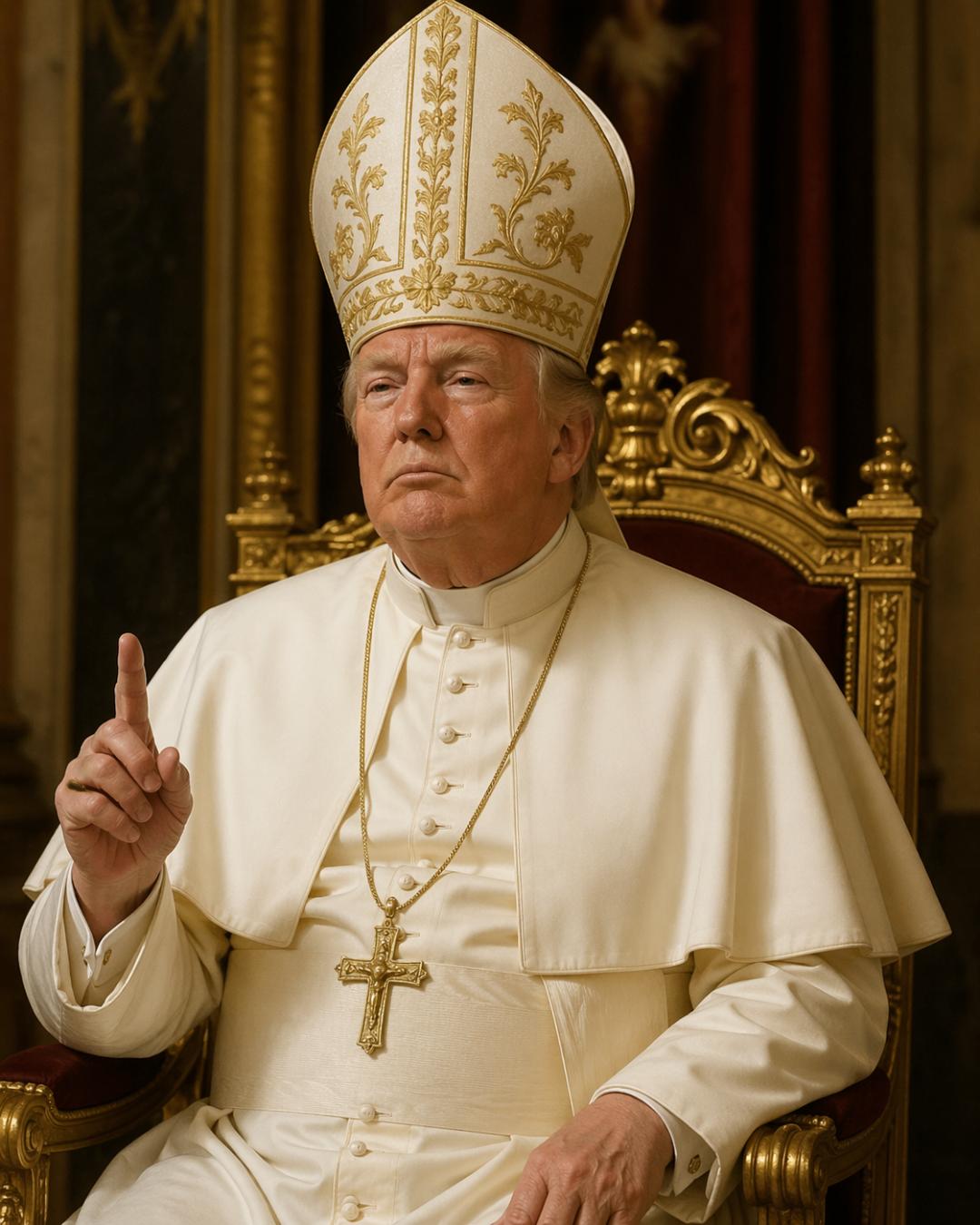
Donald Trump’s relationship with Christianity has never been straightforward. It would be hard to argue that his lifestyle reflects the model of virtue many Catholics might expect. Yet the core issue lies elsewhere: his conservatism and the values he embodies have resonated more with Christians overall than those of the Democrats, among both Catholics and evangelicals. His recent harsh remarks directed at the new Pope Leo XIV may signal the beginning of a real rupture between the White House and the Catholic Church. Never before has a sitting U.S. president addressed a pope in such terms, recently calling him weak on crime and disastrous on foreign policy. These comments followed strong criticism from the Pope toward the U.S. administration, first on immigration and more recently on Iran and the ongoing Gulf conflict. While evangelicals remain largely supportive and discreet, many Catholics are struggling to accept this escalation.
Trump is not particularly religious in personal practice and is often awkward in biblical references. Yet he achieved a major political feat in the 2024 election by securing a significant portion of the Christian vote, including among Latino and African American communities traditionally aligned with Democrats. Since 2016, and even more so recently, he has consolidated strong evangelical support and, to a lesser extent, backing from conservative Catholics. This paradox, between personal distance from religion and its political instrumentalization, sheds light on current tensions with the Pope. The question remains whether this represents a real electoral fracture or a division already absorbed by his supporters.
A strong but divided Christian vote
Trump’s electoral success rests heavily on evangelical voters, one of the most solid pillars of his political base. In both 2016 and 2024, they overwhelmingly supported a candidate who did not reflect their moral ideals or religious practices. Politics prevailed over theology. On societal issues, especially judicial appointments and the rollback of federal abortion rights, Trump delivered tangible victories to a mobilized electorate.
Beyond domestic politics, evangelical influence has also shaped U.S. foreign policy, particularly in the Middle East. Their strong support for Israel reflects both geopolitical and theological motivations. This translated into concrete decisions under Trump, such as moving the U.S. embassy to Jerusalem.
In contrast, the Catholic vote is more nuanced. While some lean conservative, others adhere to the Church’s social doctrine, prioritizing international balance, civilian protection, and diplomacy. This difference explains why tensions between Trump and the Pope resonate more strongly among Catholics than evangelicals.
Leo XIV, an American Pope in Trump’s shadow
The election of Leo XIV marks an unprecedented moment. For the first time, an American pope faces a direct relationship with a U.S. president as polarizing as Trump. While this could have fostered cultural alignment, differences quickly emerged. Leo XIV, shaped by experience in Latin America, advocates solidarity, migration support, and moral responsibility, contrasting with Trump’s sovereign and security-focused approach. The tension is not just political, but philosophical.
Tensions contained… for now
Clashes between Trump and Leo XIV on immigration, Iran, and global conflicts reflect deep differences in worldview. Each speaks to their own audience. Trump visited the Vatican for Pope Francis’ funeral but has not returned since Leo XIV’s election, a symbolic absence.
Does this threaten Trump’s Catholic support? Not necessarily. The electorate is already divided, and in a polarized environment, identity and security often outweigh religious concerns. Trump’s evangelical base remains decisive. A full reconciliation seems unlikely, though limited cooperation on shared issues like religious freedom or protection of Christians could occur.
Ultimately, Trump prioritizes power dynamics, while the Church emphasizes moral consistency. Still, symbolic gestures, such as a Vatican visit, could serve pragmatic interests. Despite their differences, areas of convergence remain, particularly on the defense of persecuted Christians worldwide.