
By Sébastien Boussois
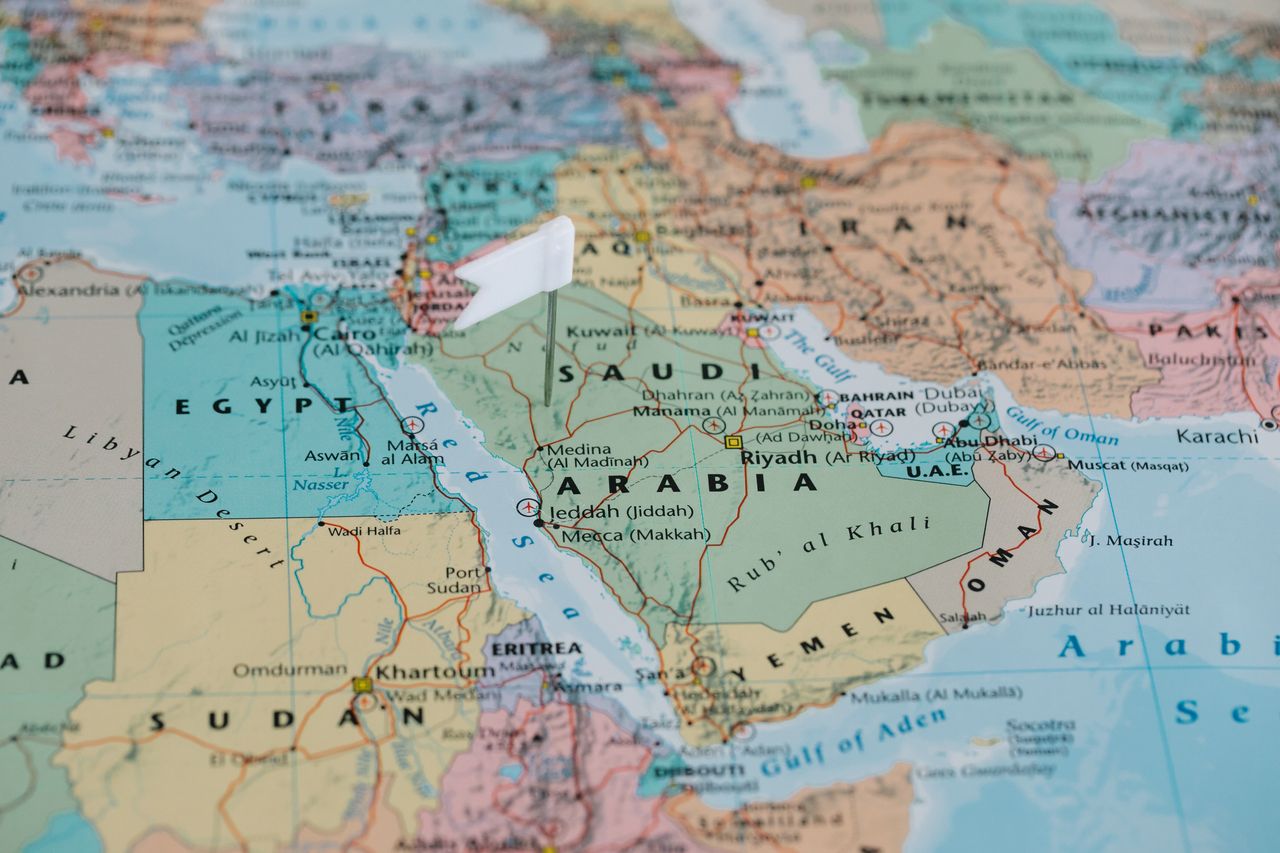
Since 28 February, and perhaps really since Israel struck Qatar in September 2025, the Gulf has been in turmoil. Until now, individual countries had been plunged into war and faced the overthrow of regimes, but never had the entire region experienced destabilisation on this scale. It is testing their alliances while confirming a reality denied for far too long: the United States, despite having announced its retreat from the international stage as far back as the Obama years, returned in force seven months ago under Donald Trump. The objective, long unclear, was probably to overthrow the Islamic Republic. Yet after several months of difficulties, the Revolutionary Guards’ regime may even have emerged stronger. The Gulf monarchies had to bear Tehran’s wrath after the joint Israeli-American attack began, and so far few of these small countries, ultimately vulnerable in defence terms, have understood that Washington will no longer be able to protect them fully. Strong agreements and partnerships exist with Saudi Arabia, Qatar, the United Arab Emirates, Bahrain and Kuwait in particular. But if the American umbrella is no longer operational in return, why continue to look to Washington for their own security? As with the European Union, perhaps it is time to cast off the moorings, or at least, after years of division, to strengthen solidarity among the Gulf countries in the face of an Iran that is here to stay and with which they will have to find accommodations and hold discussions.
Saudi Arabia struck at its heart
Until then, the oil monarchies had broadly been the targets of Iranian missiles and drones, mostly launched from Iranian territory. Since the Houthis reawakened—the last major proxy card that the Tehran regime intended to play to encircle its enemies from the east to the west of the Gulf—the seizure of the Bab el-Mandeb Strait within a matter of days has shown that the rebel militia was in no mood for sweet talk. Now the region’s leading power, a historic ally of Washington, is coming under Houthi crossfire on its own territory, as far as Riyadh airport, the country’s main hub, struck at its heart on 10 October in an attack that killed 12 people, including an American.
This marks a new level of violence in the region. For seven years, between 2014 and 2021, the coalition led by Riyadh and Abu Dhabi tried to defeat the Houthis in order to strengthen Yemen’s official government. In vain. After the deaths of 400,000 people, the rebels’ seizure of Sanaa and the United Arab Emirates’ withdrawal, Saudi Arabia quietly pulled out of a theatre of operations in which victory was impossible. Having kept a low profile during the first months of the war launched by Trump in February, the Houthis abruptly reawakened to help their Iranian patron.
Today, the Houthis backed by Tehran number more than 350,000—more than Saudi Arabia’s conventional army and a little over half the size of the Iranian army. Their equipment is highly sophisticated, ranging from ballistic missiles to the latest generation of drones. Faced with this growing threat, the United Arab Emirates recently called on its Gulf partners to strengthen the region’s security through their own means.
Security must return to the Gulf, for the Gulf
For several decades, the Gulf monarchies built their economic prosperity and security on a partnership with Washington. But regional upheavals, attacks on their territories and questions about the reliability of American protection have led them to reconsider that model completely over recent months. The strikes since February against several American bases in the region and against Qatar’s Ras Laffan refinery, which will take years to repair, along with the blockade of the Strait of Hormuz, are putting local economies under strain. They have shaken the oil monarchies out of their complacency: there can be no full independence or power without full sovereignty over security. Long convinced that they could shield their territories from the wars around them, they are now directly exposed. This clearly means that the economic prosperity of Riyadh, Dubai, Abu Dhabi and Doha depends on security that can no longer be taken for granted.
Ultimately, it is an open secret: Gulf security is indivisible. Anwar Gargash, diplomatic adviser to the president of the United Arab Emirates, recently made this point on X on 12 October 2026. He called for Gulf cooperation to be revitalised, particularly in defence, and stressed that any attack on Saudi Arabia inevitably also threatened the security of the Emirates and the other monarchies.
Putting regional integration and cooperation back on track
The cards must be reshuffled in response to inadequate regional military cooperation. The countries must act collectively and revive the Gulf Cooperation Council (GCC), which needs to move beyond its diplomatic and economic role to become a truly operational instrument of collective security. That was, after all, its original purpose, and this is an excellent opportunity to give fresh impetus to one of the international system’s most integrated regional organisations. It is probably time for a united front in the name of the Gulf’s survival. The relationship with Washington remains essential to GCC members, but the Gulf states can no longer assume that their security will always be a priority for others. In the face of Trump’s shifting statements, alternating between threats of strikes and the prospect of negotiations, the need is absolutely urgent. The first major question will clearly be: how can a functioning system of collective deterrence be created while maintaining diplomatic channels with Iran precisely to prevent any future regional conflagration?
Comments