
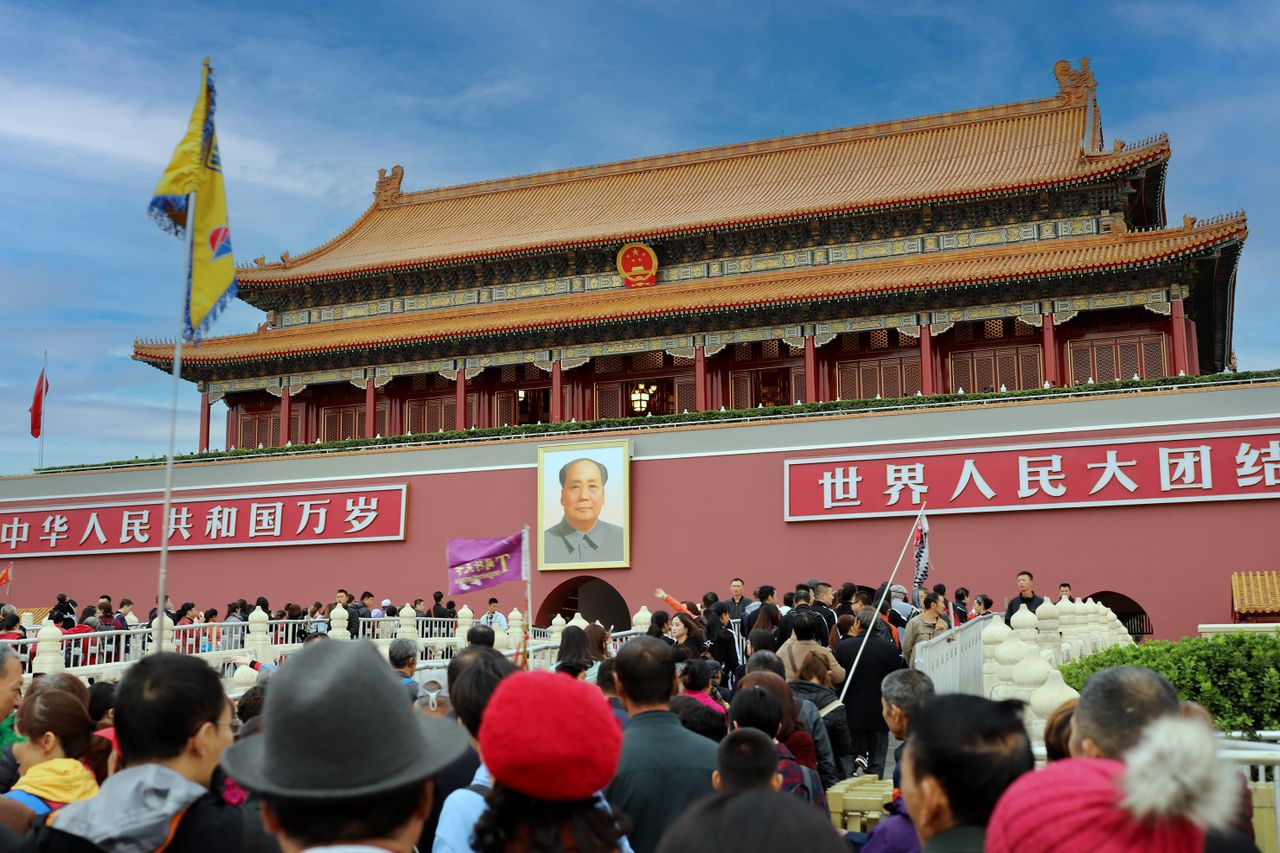
By Sébastien Boussois
Many books about the Chinese miracle have appeared over the years. There is a vast body of writing on a country that has truly awakened. We know nothing about this country, absolutely nothing, and it underwent its transformation amid our almost total indifference. Today, the West is feeling the backlash. To understand this phenomenon better, there is a recently published book that urgently deserves to be read: La Chine à toute vitesse (Arpa). Dan Wang’s remarkable book allows anyone willing to do so finally to understand more clearly what may be happening to us. Its subtitle says almost everything: China’s Quest to Shape the Future. Not only its own future but, increasingly, ours too. We clearly missed what was happening, and it may already be too late.
While we remain obsessed with the United States, to which we feel closest, the wars now under way are making us aware of our total dependence and our almost complete lack of sovereignty. Dependence on Washington may not have been ideal for some, but what happens when we depend entirely on Beijing?
Wang’s central idea is powerful and resonates with what we are experiencing on the old continent today: within a few decades, China has become an “engineering state”. By contrast, he describes the United States as more of a “society of lawyers”. The phrase can readily be extended to Europe, which has become a society of standards, procedures, regulations and precautions. We in the West have generally lost our way, turning into a thoroughly deindustrialised administrative fortress. We produce more constraints than freedoms!
While we debate what ought to be built and wonder whether we really have the means and capabilities, China builds at a furious pace. While we regulate tomorrow’s technologies, China does not hesitate: it invests massively and produces them. Consider that Beijing already possesses the industrial apparatus needed to turn an innovation into mass production within a few years. It was already known for that. This is probably where part of the power of the twenty-first century is being decided: China was the world’s workshop; now it is becoming the world’s future engineering office. It has moved from mediocre quantity to outstanding quality, ready to compete with the highest international standards—which until now were largely Western.
The engineering state
Despite everything we know about its regime, how has China managed to rise so high while we in the West feel that we are entering an endless decline? Because there is now an undeniable reality in China that Europeans sometimes prefer not to face: China knows how to make, build and produce.
It knows how to build infrastructure, trains, ports, power stations, factories and cities. Its high-speed rail network now exceeds 48,000 kilometres, and in the period from 2011 to 2013 alone it consumed more cement than the United States did throughout the twentieth century. The same revolution is unfolding in energy: China accounts for a considerable share of new global solar and wind capacity and has exceeded its own targets several years ahead of schedule. More than half of all newly installed industrial robots worldwide are now in China, while Beijing dominates solar panels, batteries, electric vehicles and many industrial supply chains essential to tomorrow’s technologies.
Even in artificial intelligence, where American dominance still seemed overwhelming until recently, Chinese players are advancing at lightning speed. Inventing a technology matters, but who now has the world’s greatest capacity to produce it at scale? China, of course. That is what the engineering state means: not merely inventing, but actually building.
The price of power
In his book, Dan Wang is no fool, nor does he offer a naïve celebration of the Chinese model. He is Canadian and writes from the United States, which gives him considerable freedom of expression, but his aim is more to explain than to condemn. The regime is what it is, and the “engineering state” has a dark side: China is also an authoritarian surveillance society. Technologies that make it possible to organise an economy, infrastructure and cities also make it possible to control information, public space and the population. The author is therefore fully aware that the efficiency of the engineering state can never truly be separated from the nature of the Chinese regime.
Yet the results are there: within a few decades, hundreds of millions of Chinese people have seen their material living conditions improve, a huge middle class has emerged, consumption has expanded and infrastructure has transformed the country. China has moved from being a low-cost workshop to becoming a leading industrial and technological power—if it is not already the leading one.
Over the years, a kind of implicit political contract has taken shape: sharply limited political freedoms, but in return the promise of growth, consumption, stability, upward social mobility and the restoration of Chinese power. We should neither idealise this compromise nor assume that all Chinese people endorse it. But it explains part of the country’s trajectory. Above all, it forces us to confront our own situation: in Europe we have democracy, the rule of law and civil liberties, a wealth we obviously have no intention of giving up. But have we retained the power, and above all the sovereignty, needed to protect them? Sadly, we know the answer.
We have done exactly the opposite of Beijing!
For several decades, we have deindustrialised our economies, relocated parts of our value chains and assumed that services, finance and design would suffice while others did the manufacturing on the other side of the world. We are now discovering the geopolitical cost of that illusion: China now invents products that the whole world will want. We want electric cars, but we depend heavily on Asia for their batteries. The same is true of solar power and artificial intelligence, where American and Chinese companies occupy most of the field. We talk about digital sovereignty while making extensive use of foreign technologies because we have no alternative. And, as the icing on the cake, China has extraordinary reserves of the critical minerals essential to tomorrow’s industry.
Behind technology lies education. The latest available PISA results showed a historic fall in mathematics and a decline in reading comprehension in France. How can we now catch up? All the more so because China is not simply seeking to replace the United States at the head of the world; it is seeking to take the place of the entire West. And we are now handing it all over on a silver platter. In radically different contexts, all the states challenging our global leadership have understood that scientific, technical and industrial mastery multiplies sovereignty. Producing one’s own infrastructure, technologies, drones, missiles, robots and networks reduces dependence on others and therefore increases strategic autonomy.
When we see China, Russia and Iran resisting the thoroughly outdated defenders of the old world, how can we still think otherwise? As Dan Wang reminds us, China has enormous vulnerabilities: an ageing population, debt, a property crisis, insufficient domestic consumption, industrial overcapacity and political authoritarianism. Nothing therefore guarantees that it will dominate the twenty-first century, particularly as the United States, India and other powers also intend to shape it in their own way. But Beijing possesses something essential: a bulldozer strategy and the industrial, scientific and financial capabilities to clear its path.


Comments