by Abderrahmane Guellab
Over the past few months, the Libyan economy has shown increasing signs of suffocation, while the population has grown weary of the deterioration of the country’s political, security and economic institutions. The Governor of the Central Bank of Libya, Issa Naji, succeeded in securing the adoption of a unified national budget between the two rival governments: in the East, the Government of National Stability (GNS), under the authority of Field Marshal Khalifa Haftar and supported by the House of Representatives in Tobruk; and in the West, the Government of National Unity (GNU), led by Abdel Hamid Dbeibah, backed by the High Council of State in Tripoli and recognised by the United Nations.
This duality of rival governments makes the effective implementation of the country’s fiscal policy particularly difficult. Fighting has intensified in western Libya, while political demonstrations continue after fifteen years without the democratic aspirations of the Libyan population being fulfilled.
Since the 8 August 2026 drone attack, involving Ukrainian-made drones, on the Zawiya refinery—which destroyed a power station and a tank containing thirteen million litres of petrol, according to the Brega company responsible for the oil complex—suspicions have been directed towards the Dbeibah government, which has remained silent about the findings of the investigation.
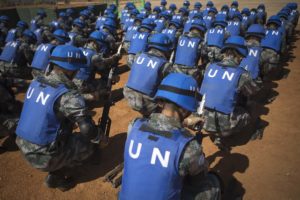
Two days after the attack, Brigadier General Fawzi Al Mansouri, head of military intelligence for Field Marshal Haftar’s army, was assassinated in Benghazi by a car bomb. These two events mark an escalation in the conflict and risk derailing both the Boulos Plan proposed by President Trump and, above all, the roadmap put forward by Hanna Serwaa Tetteh, head of the United Nations Support Mission in Libya (UNSMIL).
During a UN Security Council meeting on Libya held by videoconference in 2025, the UN Secretary-General’s Special Representative for Libya stressed the damaging effects of parallel institutions, in which the slightest appointment or reform can become a pretext for confrontation. According to her, the coexistence of two judicial systems, two budgets and a myriad of autonomous authorities undermines the very legitimacy of the state. The Libyan people deserve political stability and lasting peace, but this also requires the international community to speak with one voice (UN, 2025).
The Boulos Plan
The Trump administration has attempted to help Libyans unify their security, financial and administrative institutions, notably by proposing the creation of a new, inclusive executive authority that would govern until elections could be held. Massad Boulos, Tiffany Trump’s father-in-law and senior adviser to the President on Arab and African affairs, Jeremy Berndt, Chargé d’Affaires, and representatives of the United States Africa Command (AFRICOM) have visited Libya several times since 2025. These efforts contributed to an agreement in April 2026 on Libya’s first unified national budget […]
The United States has also strengthened commercial ties, notably through oil and gas agreements concluded in 2026 with Chevron and a $20 billion production-enhancement agreement involving ConocoPhillips and TotalEnergies (Blanchard, 2026). According to a White House spokesperson’s statement of 18 April 2026, Egypt, France, Germany, Italy, Qatar, Saudi Arabia, Türkiye, the United Arab Emirates, the United Kingdom and the United States welcomed the signing, on 11 April, of a unified budget for Libya for 2026. The agreement could contribute to greater stability and prosperity for Libya (U.S. Department of State, 2026).
Looking at various political analyses, however, the risk of deepening divisions among Libyan elites appears increasingly evident, as the plan postpones elections while bringing to the forefront a political arrangement involving three powerful families: the Trump, Dbeibah and Haftar families.
President Trump’s policy is straightforward and does not primarily seek legitimacy through elections. Instead, it focuses on negotiations between families: one in Washington, with influence over international financial flows and certain oil companies; another in Tripoli, controlling Libya’s administrative and financial institutions; and the third in Benghazi, controlling the oil and gas production chain and export terminals. Ultimately, this approach to resolving the conflict increasingly resembles a deal between three power-holders—Dbeibah, Haftar and Trump—with little involvement from the Libyan people. The question now is whether the Boulos Plan can survive.
The Imbroglio of Foreign Interference
Inspired by the Tunisian Revolution, Libyans began openly challenging the regime. Gaddafi responded with extreme brutality, triggering a genuine civil war with the support of mercenaries recruited from the Sahel […] As Benghazi, the capital of Cyrenaica, appeared close to falling to Gaddafi’s counter-offensive, NATO aircraft intervened in support of the insurgents in an effort to prevent a massacre.
After several months of inconclusive fighting and several thousand deaths, the insurgents eventually seized Tripoli. Gaddafi and his remaining loyalists resisted for a time in Sirte, the dictator’s hometown. He was killed on 20 October 2011 as he attempted to flee the city following a NATO air strike (Roman-Amat, 2020).
Following the success of the democratic coalition, however, anarchy took hold. Western countries withdrew from the disorder they had helped create. Amid widespread insecurity, oil production collapsed from 1.5 million barrels per day in 2011 to 200,000 in 2014. The country became prey to armed groups seeking to seize oil resources or profit from the transit of African migrants towards Europe (Dignat, 2021). Following Gaddafi’s death, chaos prevailed before gradually developing into a frozen conflict punctuated by periodic crises, managed by warlords and representatives of the two rival governments—the GNU and GNS—as well as by foreign powers.
In late 2019 and early 2020, Türkiye intervened decisively to prevent the fall of Tripoli during Field Marshal Haftar’s offensive. By deploying drones, electronic warfare systems and advisers, while facilitating the transfer of Syrian fighters, Ankara altered the balance of power, broke the siege of Tripoli and pushed the Libyan National Army (LNA) back towards the Sirte line.
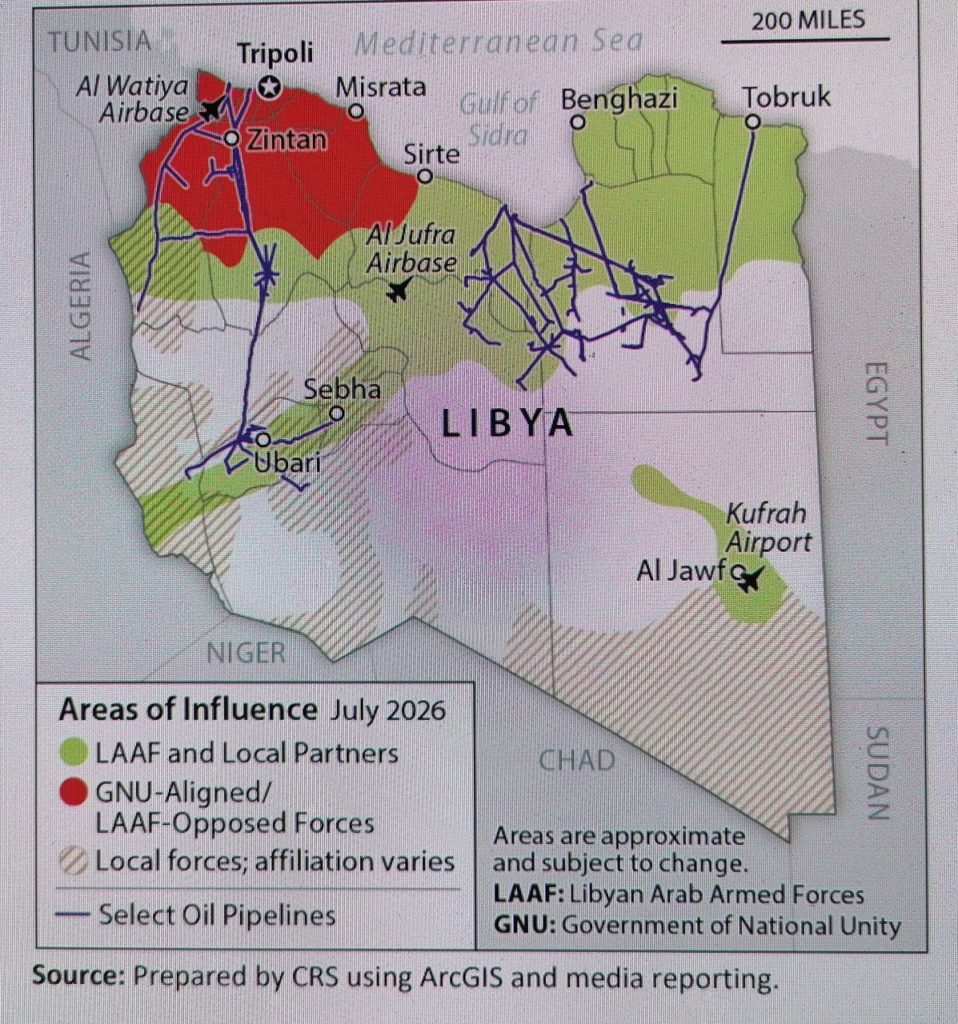
Türkiye consequently strengthened its strategic influence through military access, training partnerships and maritime and economic agreements […] Moscow, meanwhile, reinforced the operational capabilities of the LNA and consolidated its military presence in strategic areas around Sirte, Jufra and the Oil Crescent. Libya therefore provides Russia with a lever of influence on Europe’s southern flank and a platform for access to North Africa and the Sahel (ASA, 2026).
Kremlin-backed private military companies first arrived in Libya around 2016, when the military consultancy Russian Security Systems (RSB-Group) conducted demining operations in north-eastern Libya, an area controlled by the LNA.
In May 2018, another Russian private military company, the Wagner Group, began supporting LNA operations during the Libyan civil war. By May 2023, Wagner had established a presence at at least four Libyan air bases. Following the death of Wagner leader Yevgeny Prigozhin in August 2023, the Kremlin announced that Wagner’s African networks would be replaced by the Africa Corps (Chapman et al., 2026).
The Trump administration, meanwhile, is seeking to reverse a decade of American disengagement from Libya following the murder of U.S. Ambassador Chris Stevens in 2012, notably by promoting the appointment of Saddam Haftar, son of Field Marshal Haftar, as the future head of Libya’s Presidential Council.
Washington is pursuing two principal objectives: a geostrategic one, aimed at reducing Russia’s military presence through AFRICOM activities, and a geoeconomic one, involving the development of the energy market and the promotion of American oil companies. Saddam Haftar’s visit on 29 June 2026 to the seventh floor of Secretary of State Marco Rubio’s State Department, as part of preparations for a possible future leadership role in Libya, was poorly received by some political actors, particularly those close to Dbeibah. This American initiative has fuelled dissatisfaction among sections of the Libyan population and caused concern within UNSMIL. Are individuals themselves the real problem, or is it the system within which they operate?
Egypt, the United Arab Emirates, Qatar, Italy and France remain actors with less geostrategic influence than Türkiye, Russia or the United States.
The international dimension is also crucial to migration management in Libya. Because of its strategic location, the country attracts numerous regional and international actors, each pursuing its own interests. The European Union has played a major role in attempting to limit migration flows towards Europe through financial assistance, training for the Libyan coastguard and development projects. These initiatives have nevertheless been criticised for prioritising border control over migrants’ rights (Monyani, 2024).
Calls for the withdrawal of foreign military forces remain popular and are frequently reiterated in national and international forums, but so far without tangible effect.
A Continuing Impasse
The existence of two competing executive authorities, combined with stalled negotiations between rival parties over the adoption of a unified military framework that could pave the way for new elections, points towards a continuing political impasse. Neither government exercises authority over the entire territory, and both rely on armed groups and foreign support to remain in power and gain access to wealth within a rentier economy where corruption remains endemic.
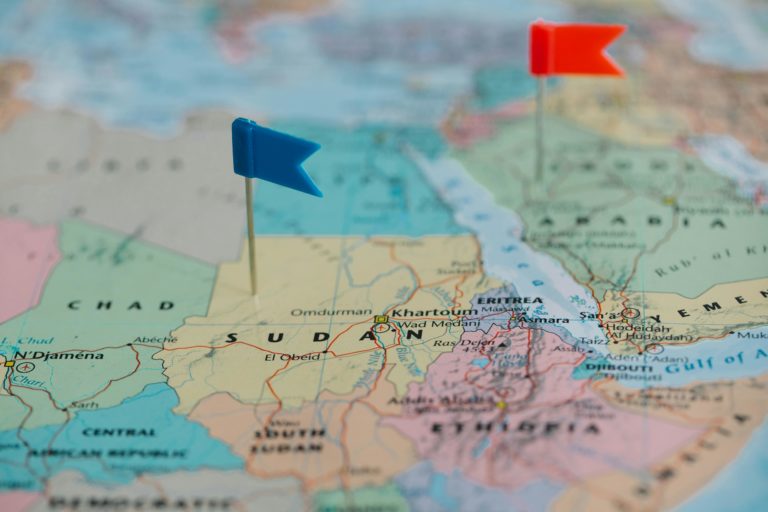
Libya therefore finds itself trapped between the competing interests of Western and Eastern foreign powers and the internal fragmentation of its political and military forces. This situation undermines African regional cooperation and could lead to contradictory alignments among neighbouring countries already confronted with arms flows, mercenaries and migration pressures. It could ultimately trigger a new conflict with consequences extending far beyond Libya’s borders towards Chad, Egypt, Algeria, Niger and Sudan—or even result in the partition of the country.
References
- ASA, African Security Analysis, Libya’s Crisis in 2025: Fragmentation, Foreign Influence and Prospects for Stability, 2 January 2026.
- Blanchard, Christopher M., Libya and U.S. Policy, Congressional Research Service, 21 July 2026.
- Chapman, B., Word, C., Coffey, S., O’Brien, S. et al., Libya: Russia Develops Air Base Infrastructure Likely to Secure Military Foothold in North Africa and the Sahel, University of Texas at Austin, 3 June 2026.
- Dignat, Alban, 20 October 2011: Gaddafi Is Killed by His Opponents and NATO, 22 October 2021.
- Monyani, Margaret, Shifting Sands: Migration Politics and Governance in Libya, Tunisia and Egypt, Institute for Security Studies, 2024.
- United Nations, Libya: Two Governments, One Impasse, UN News, 14 October 2025.
- Roman-Amat, Béatrice, 1 September 1969: Gaddafi Overthrows King Idris I in Libya, 25 August 2020.
- U.S. Department of State, Joint Statement on Libya Unified Budget Agreement, 18 April 2026.