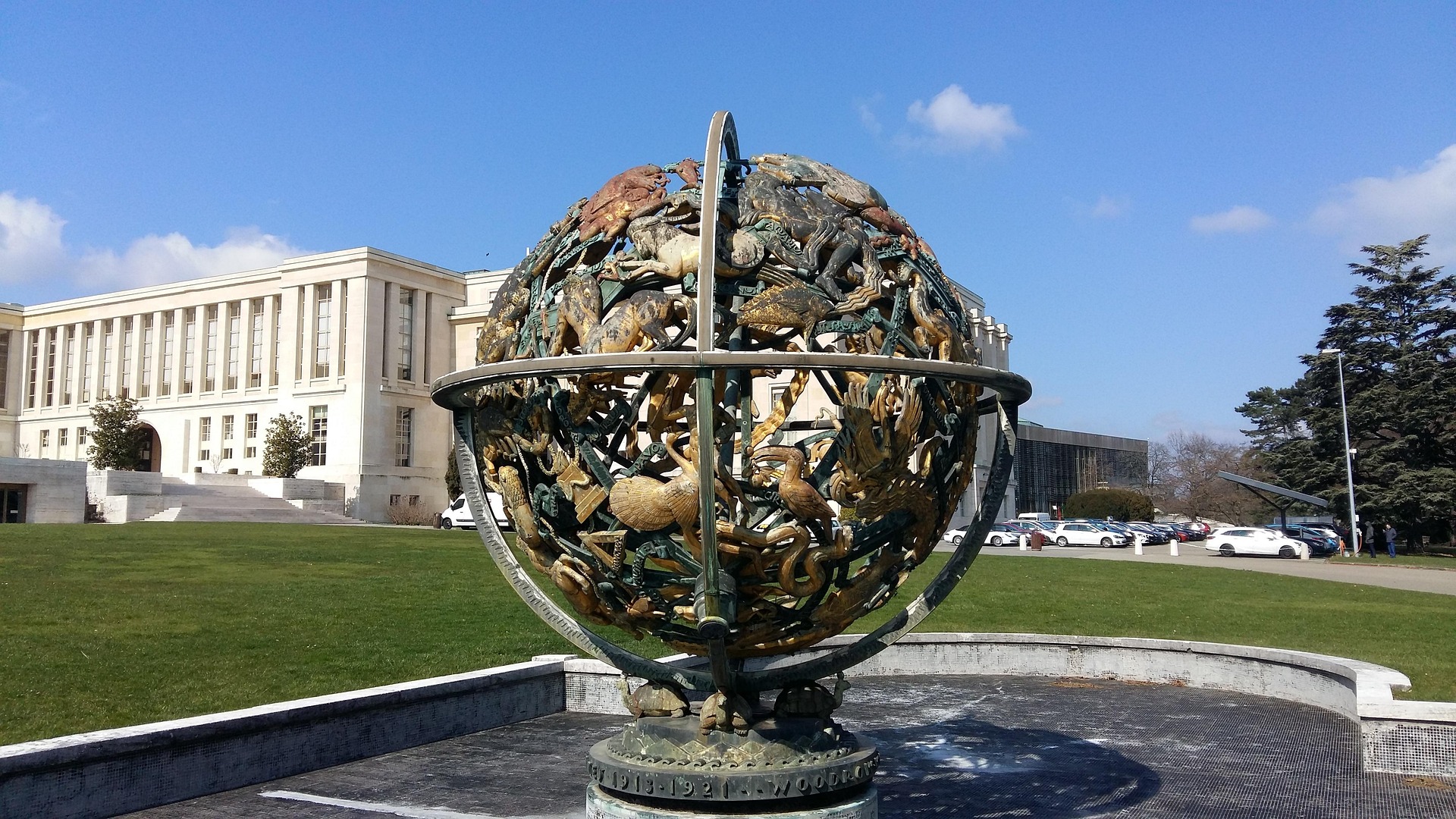
In Geneva, during a meeting on Monday, March 16, the United Nations Human Rights Council was the scene of strong warnings over the worsening war in the Middle East. Independent experts and diplomats described a “spiral of armed conflicts” fueled by Israeli and U.S. strikes against Iran, Tehran’s retaliation against Gulf states, and the military escalation in Lebanon.
In Geneva, the UN’s main human rights forum devoted a significant portion of its discussions to the rapid expansion of the conflict in the Middle East. Before member states, several experts denounced the rising number of civilian casualties since the launch, on February 28, of an aerial campaign led by the United States and Israel against Iran.
Sara Hossein, Chair of the Independent International Fact-Finding Mission on Iran, described a “devastating aerial campaign” officially targeting Iranian military and nuclear sites but already causing “an increasing number of civilian casualties, including children.” According to her, the Iranian population is “caught in a vice between a large-scale military offensive and the ongoing repression exercised by its own government.”
The expert also referred to strikes hitting residential areas, oil depots, and a desalination plant, causing “serious harm” to civilians. Among the deadliest attacks was the bombing of a school in Minab, in southern Iran, destroyed on the first day of the conflict. More than 168 people were reportedly killed, “the vast majority being schoolgirls, some as young as seven,” she said.
Concerns were also raised regarding compliance with international humanitarian law. Sara Hossein expressed concern over public statements by U.S. officials suggesting that the usual “rules of engagement” might not be respected in this conflict.
The Council’s Special Rapporteur on Iran, Mai Sato, for her part painted an alarming picture of the humanitarian consequences of the war. According to information gathered under her mandate, nearly 1,000 civilians have already been killed, while hospitals and World Heritage sites have been destroyed.
Strikes targeting oil infrastructure have also led to “disastrous environmental consequences,” she warned, in a country already facing severe water shortages. The humanitarian crisis is also worsening within Iran: approximately three million people have reportedly been displaced since the beginning of hostilities. The absence of warning sirens and functional bomb shelters in several cities has heightened concerns over civilian protection.
In response to these accusations, Iran’s ambassador to the UN in Geneva, Ali Bahreini, denounced a deadly war being waged against his country. According to Tehran, more than 1,300 people have been killed and over 7,000 injured, “including a six-month-old baby.” “The international community must not remain silent,” he told the Council.
The war, now in its third week, has spread to nearly a dozen countries across the region. Gulf states have strongly condemned Iranian strikes on their territories. Speaking on behalf of the Gulf Cooperation Council and Jordan, Bahrain’s ambassador, Abdullah Abdulatif Abdullah, condemned attacks targeting “civilians, critical infrastructure, and civilian property.”
The diplomat also recalled that these countries welcomed the adoption, on March 11, of UN Security Council Resolution 2817 condemning Iranian strikes against its neighbors, a text supported by 136 UN member states. Gulf countries also rejected the conclusions of independent experts describing some of these attacks as acts of retaliation, arguing that “there is no legal justification for such actions.”
Beyond these opposing diplomatic positions, concern is widely shared over the dynamics of regional escalation. The Philippines, speaking on behalf of several Southeast Asian countries, warned that “this spiral of armed conflicts has already claimed the lives of many innocent people, including children,” calling for urgent efforts to prevent such violence from becoming the norm.
At the Human Rights Council, where debates took on a particularly grave tone, many now fear that the conflict could become entrenched in a region already deeply unstable.
Source: UN statement