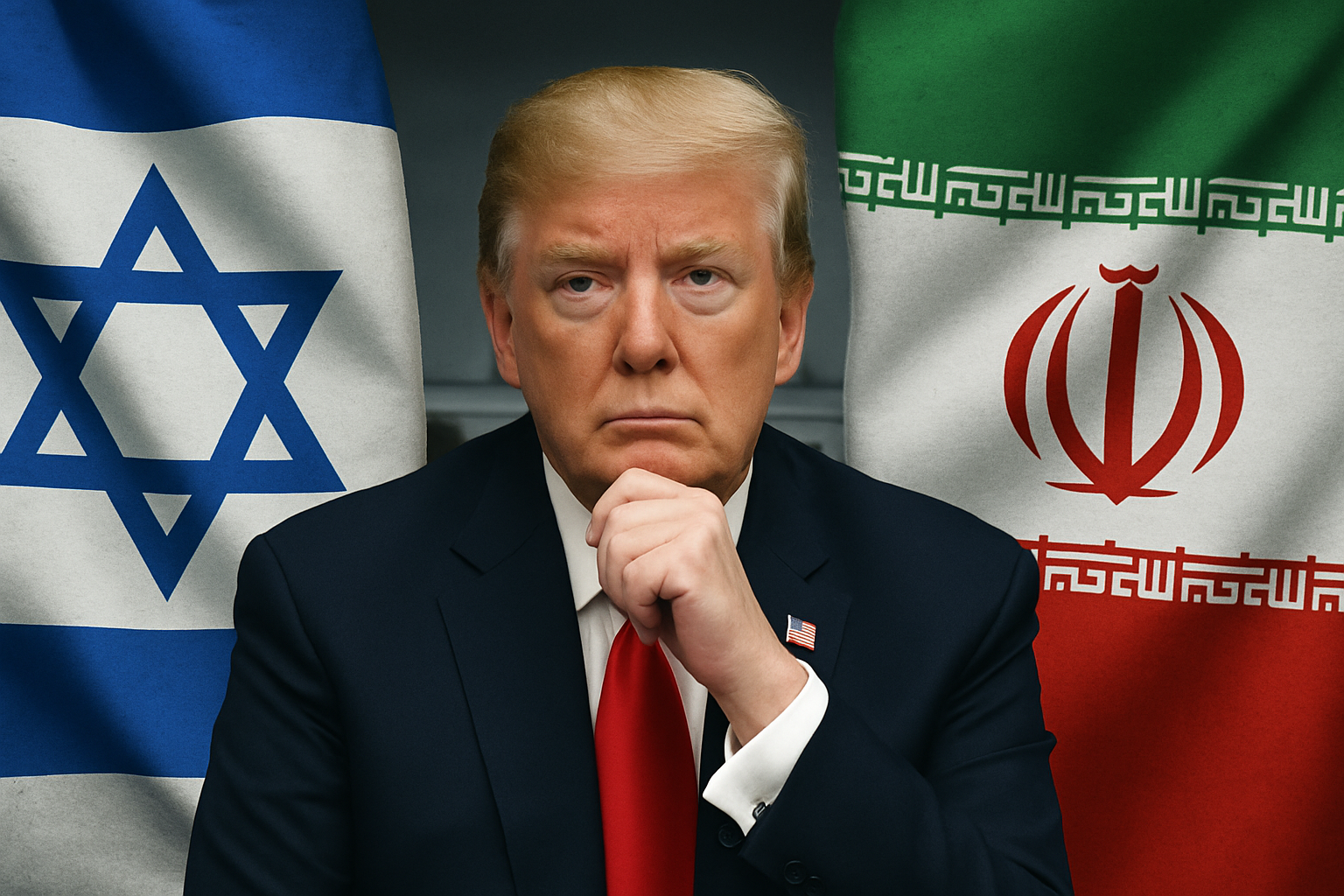
What has just occurred at the top of Iran’s power structure marks a major strategic rupture in the history of the Middle East. The targeted elimination of central figures of the regime, beginning with Supreme Leader Ali Khamenei but also including the Chief of Staff, the Iranian Minister of Defense, former President Mahmoud Ahmadinejad, the methodical weakening of senior Revolutionary Guard commanders, and the direct or indirect involvement of the United States alongside Israel have pushed the confrontation into a new phase. After weeks of negotiations that led nowhere, war has returned. This new conflict represents an explicit attempt to decapitate the regime — a hope for its collapse, or at the very least the desire for a deep and lasting weakening of Tehran’s power structure.
It is also a dangerous gamble on internal implosion, with the expectation that opposition forces will take over. Donald Trump, who had promised not to entangle America in prolonged Middle Eastern conflicts, appears to have crossed a threshold, likely under strategic pressure from Benjamin Netanyahu. Iran today looks disoriented, struck at its core, but certainly not annihilated. History urges caution: removing leaders does not mean dismantling a system. This is not pessimism; it is simply historical awareness.
The temptation of “regime change” has long fascinated Western powers. Iraq in 2003 was expected to collapse mechanically after Saddam Hussein’s fall. Post-Taliban Afghanistan was supposed to stabilize once its leaders were neutralized. We know what followed: division, civil war, network resilience, and the resurgence of even more radical insurgencies. Iran is not a one-man regime. It is a deeply rooted ideological, security, and bureaucratic architecture. The Supreme Leader was neither an isolated piece nor merely the cherry on top; he was embedded within a dense network composed of the Guardian Council, the Assembly of Experts, the Revolutionary Guards, the Basij militia, a loyal judiciary, and a vast para-state economic system. At this stage — and this is what is most worrying — no major defections are visible. Even weakened, the regime’s hard core remains structured, fighting back, and has already launched unprecedented reprisals across the region. In recent months, fearing targeted strikes, the leadership had dispersed military assets and decentralized decision-making and security processes. Decapitation is not dissolution. A cornered regime does not necessarily fall; it often radicalizes — and may turn even more violently against Iranians who might now consider shifting from peaceful protest to force. But how, with no means and isolated inside the country?
Meanwhile, calls for a popular uprising — amplified in recent hours by Netanyahu and Trump — collide with political reality: the ambiguity of external support, suspicion surrounding a potential all-in bet on Reza Pahlavi, son of the Shah and reluctant heir to a harsh dictatorship, who nevertheless has worked on a serious transition project supported by hundreds of experts, and who has lived in exile in the United States for decades. The Iranian people risk being left alone to confront a regime fully aware that no Western ground intervention is likely to come to their rescue.
Since last December, protests have shown a courageous, exhausted Iranian society determined to challenge the established order. Women, students, and urban middle classes have defied a brutal repressive apparatus. But moral uprising must be distinguished from political power seizure. Historically, regime transformations rarely result from peaceful mobilization alone. They require elite fractures, a shift within the armed forces, or control over key power centers: state media, the presidency, government headquarters, military barracks, parliament, and security structures. None of this is visible today. Protesters fill the streets but control neither institutions nor armed forces. They lack unified command, a consensual program, and operational leadership capable of organizing immediate transition. Encouraging Iranians to rise up without offering protection or transitional structure exposes them to intensified repression. A regime under siege can become infinitely more violent. This is the current risk for a country of 90 million people.
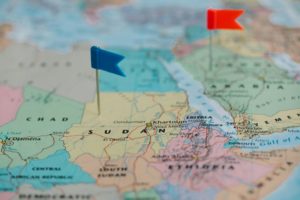
The regional dimension adds further danger. Iran now feels encircled and has made the strategic error of striking neighboring states that had initially opposed intervention. Qatar hosts a major U.S. military base. The United Arab Emirates have made Israel a primary political, military, and economic partner since the 2020 Abraham Accords. Bahrain also hosts a significant American presence. The Shiite arc — long perceived as Tehran’s regional instrument of influence — has collapsed, leaving only the head of the octopus. But a cornered power may choose escalation. Reprisals against Israel are already intense, with casualties reported, including in Beit Shemesh in central Israel. Implicit threats against Gulf states clearly reflect both a survival strategy and a form of strategic self-destruction: striking to prove that deterrent capacity remains. In this context, regional conflagration is not theoretical — it is a real possibility.
The central question remains what comes next. Reza Pahlavi stands ready, advocating an orderly transition and pledging to unite opposition forces to prevent chaos. Yet the opposition in exile, fragmented across Europe and the United States, has been distant from Iran’s internal realities for decades. There is no guarantee it can unite, let alone govern a country as complex and fractured as Iran. Between a weakened but structured regime and a divided opposition, political vacuum is a credible scenario. History shows that vacuum rarely produces stability.
One may understand the strategic logic of Israel and the United States: ending a Republic perceived as the matrix of a persistent regional threat. But destroying is always easier than rebuilding. The fall of a man does not equal the fall of a system. Iran may survive for months, perhaps longer, in a militarized survival mode. In the meantime, it is the Iranian people who will pay the highest price: intensified repression, internal purges, radicalization of security institutions, and the uncompromising logic of the Basij and the Revolutionary Guards. We are therefore far — for now — from a guaranteed collapse. What lies ahead is not yet the end of a regime, but a phase of profound instability whose outcome no one can predict. The hardest moment for Iranians is not behind them. It is beginning. And they have already proven their resilience. What remains now is organization.