
On the eve of his visit to Geneva, where he is scheduled to speak on Tuesday at the Institut Florimont at the invitation of the Société des membres de la Légion d’honneur (SMLH), Bernard Cazeneuve granted an interview to La Tribune des Nations. The former French Minister of the Interior shares his analysis of how the terrorist threat in Europe has evolved, the new global security balance, the role of multilateralism, and the challenges posed to the rule of law—while stressing the fundamental need to reconcile, over the long term, security and freedom.
Since the attacks of 2015 and 2016, how have you seen the nature of the terrorist threat in Europe evolve? Is it now more diffuse, more local, or simply different?
The threat no longer has the same intensity, largely due to the measures taken by individual states and by the European Union since 2014 to strengthen the capacities of security and intelligence services—through new legislative tools, increased staffing and expanded budgets. States are therefore better equipped to confront the terrorist threat. In France in particular, the Intelligence Act of July 2015 made it possible to reinforce the preventive capacities of our services.
In 2014, French intelligence activities were governed by a law dating back to 1991—an era without mobile phones or the Internet, even though terrorists were already preparing attacks using encrypted means of communication. The enhanced cooperation within the European Union—through information sharing made possible by the activation of the Schengen Information System, the introduction of the Passenger Name Record (PNR), the reform of the Schengen Borders Code, as well as judicial and police cooperation via Eurojust and Europol—made it possible to better coordinate the action of the various services involved in counterterrorism. Nevertheless, despite these efforts, the threat remains real and can resurface at any moment. What has been initiated must be pursued, and vigilance must remain constant.
Is jihadist terrorism still, in your view, the main threat facing Europe, or must we now give equal attention to other forms of violent radicalisation?
Europe is now confronted with a threat that did not exist in its current form in 2014 and 2015—namely cyber-threats—and with the return of war to the European continent, particularly on its eastern flank in Ukraine. This situation raises many questions about our collective ability to preserve peace by ensuring a credible common security framework in Europe. We will not escape the need for states to rearm and for European defence cooperation to be strengthened within NATO, especially at a time when the transatlantic bond is being called into question by the Trump administration.
As for violent radicalisation, the most significant threat remains, in my view, Islamist terrorism: various hotspots of activity persist around the world and could, at any moment, regain the capacity to project criminal commandos onto European soil, particularly from Syria or Afghanistan. There is also a spreading of terrorist activity across the Sahel, where we see the serious dangers it poses for the future of certain countries, notably Mali. This global context represents a clear risk for Europe, which must therefore remain extremely vigilant and fully mobilised.
Developments in the Sahel remain a major concern. What would be required today to stabilise the region and contain the groups that are once again gaining ground?
France intervened very quickly in the Sahel to prevent Mali from falling into the hands of Islamist groups—an outcome that would have reduced the country to slavery and inflicted tremendous suffering on its population. France was right to act in 2013. But France cannot do everything alone, nor can it remain indefinitely engaged on operational fronts where the handover must eventually be made to African multinational forces supported by the United Nations.
African states have taken part in the fight against terrorism in the Sahel. Chad, for example, played a particularly important role in combatting Boko Haram. But France cannot act permanently in Africa on theatres of operations where the relay must, sooner or later, be taken up regionally.
You have often emphasised the importance of European intelligence cooperation. Has real progress been made over the past decade, or do significant obstacles remain?
I believe substantial progress has been made in the past ten years in terms of cooperation between intelligence services. This is due in particular to the development of tools such as the Schengen Information System (SIS), the database of wanted persons, and the PNR, which enable continuous exchanges of information between police and intelligence services.
Nearly 75 million items of information are exchanged every year within the European Union thanks to the Schengen Information System—an instrument provided for by European treaties and essential to the centralisation and transmission of data between services. Significant progress has been achieved in the context of the terrorist crisis to strengthen cooperation and to make states’ preventive and counterterrorism efforts far more effective than before.
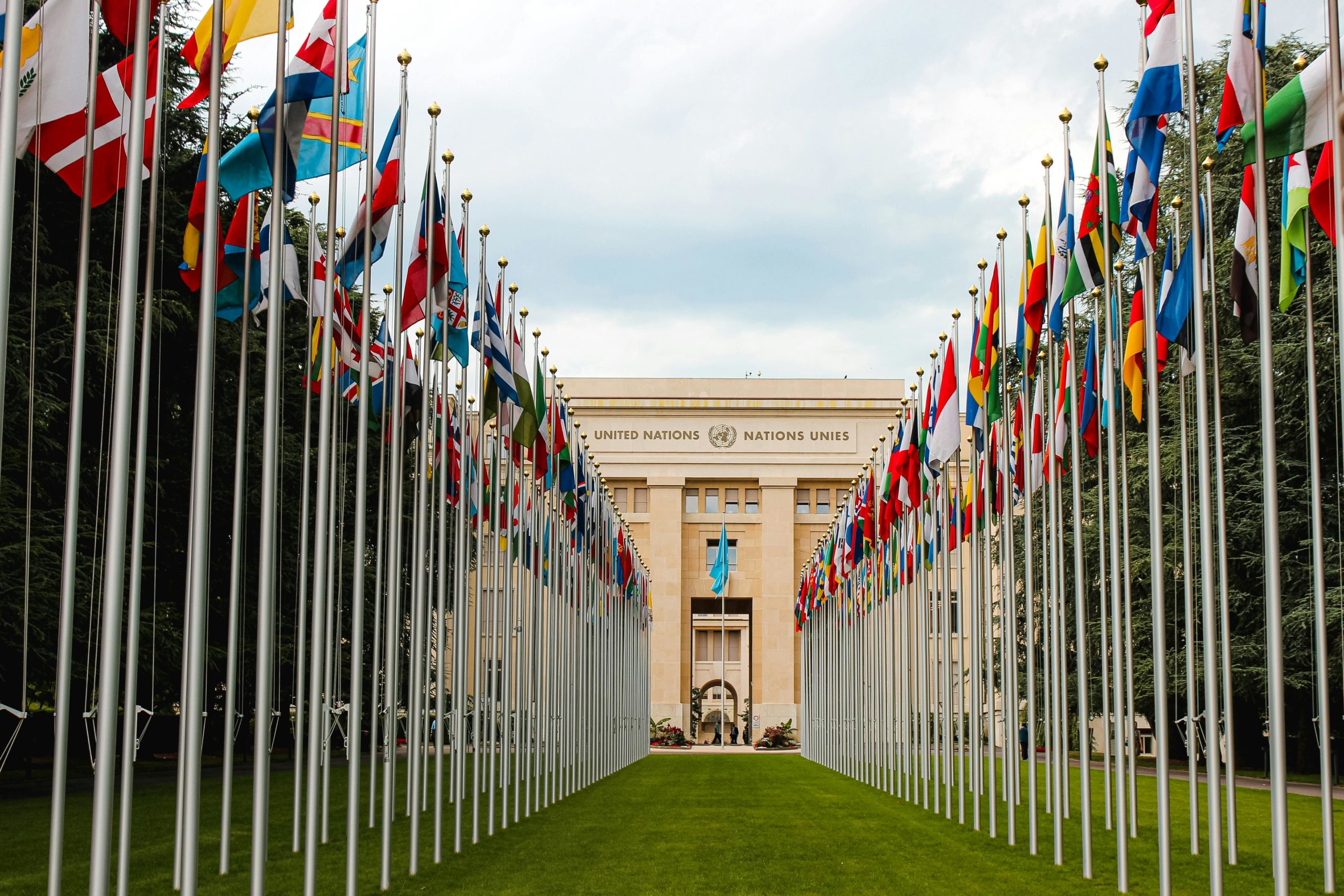
In a city like Geneva, a symbol of multilateralism, what role can international organisations play in preventing and combatting terrorism?
We are witnessing the beginning of a new era, marked by a weakening of the principles of international law and the international order established after the Second World War—principles of which the organisations based in Geneva are both the incarnation and the symbol. This erosion is linked to the resurgence of national ambitions and imperial impulses, including within the free world, as illustrated by recent developments in the United States. We are also witnessing a decline in commitment to the principles of the rule of law.
Many political forces, including in democratic states, now believe it possible to strip democracy of the principles of the rule of law without undermining the universal values we share. In a world where imperial ambitions and sometimes predatory aims are re-emerging—whether economic, commercial or military—the role of multilateral organisations is therefore decisive. It is all the more so because peace cannot be maintained if force supplants law everywhere.
Is it still possible to draw clear distinctions between terrorism, organised crime, and hybrid state strategies, or have these boundaries become porous?
These boundaries have been porous for a long time. We observed, particularly during the deadliest attacks of 2014–2016, close links between terrorist organisations and international criminal networks. Certain non-terrorist criminal activities have contributed to financing terrorist operations. The mass killings committed in Europe were made possible by access to weapons often recycled from the Balkan wars and sold to terrorists by criminal arms-trafficking networks.
This is why I worked actively within the European Union to secure adoption of a European directive against arms trafficking—something that was finally achieved following the Bataclan, Stade de France and Paris terrace attacks. Similarly, strengthened cooperation within Eurojust and Europol made it possible to fight more effectively against these criminal and mafia networks.
Based on your experience, what was the most difficult moment in managing the terrorist threat at the highest level of the State?
Every moment was difficult. The attacks, which caused so many deaths, profoundly traumatised public opinion and plunged the nation into mourning. These were terrible periods, both for the French people and for those who bore responsibility within the state apparatus. We were engaged in a true race against time, constantly reinforcing the budgetary and legislative resources available to security and intelligence forces, while respecting the principles of the rule of law. Each attack was lived as a failure by those responsible for protecting the French people, and as an ordeal for the entire nation.
In your view, what mistakes must be avoided in the years to come?
The governments that led the countries of the European Union—including France—did their best, in my view, to combat terrorism. We quickly grasped the nature of Islamism: a totalitarian ideology whose first victims were Muslims themselves, and which committed atrocious crimes to impose a social order radically opposed to democratic principles.
We acted without naïveté to fight and eradicate this ideology and the threat it carried. I was fortunate, during my time as Minister of the Interior, to act in a relatively consensual political climate, where political forces—both on the right and on the left—demonstrated responsibility and prevented the country from descending into confrontation.
Finally, what message would you address to young Europeans facing these challenges of security and freedom?
I would tell them that everything done for security is not done at the expense of freedom. Those who commit terrorist acts seek precisely to push us to renounce our freedoms, because they know that such a renunciation would create extreme tensions and weaken our ability to live together. Whatever trials lie ahead, we must always preserve the fragile bond that unites freedom and security, with a shared ambition to safeguard and deepen democracy, fraternity, and respect for others. Security guarantees freedom—and freedom must remain the foremost concern of those entrusted with ensuring the security of our citizens, because the true purpose of security policy is to allow each person to remain free.