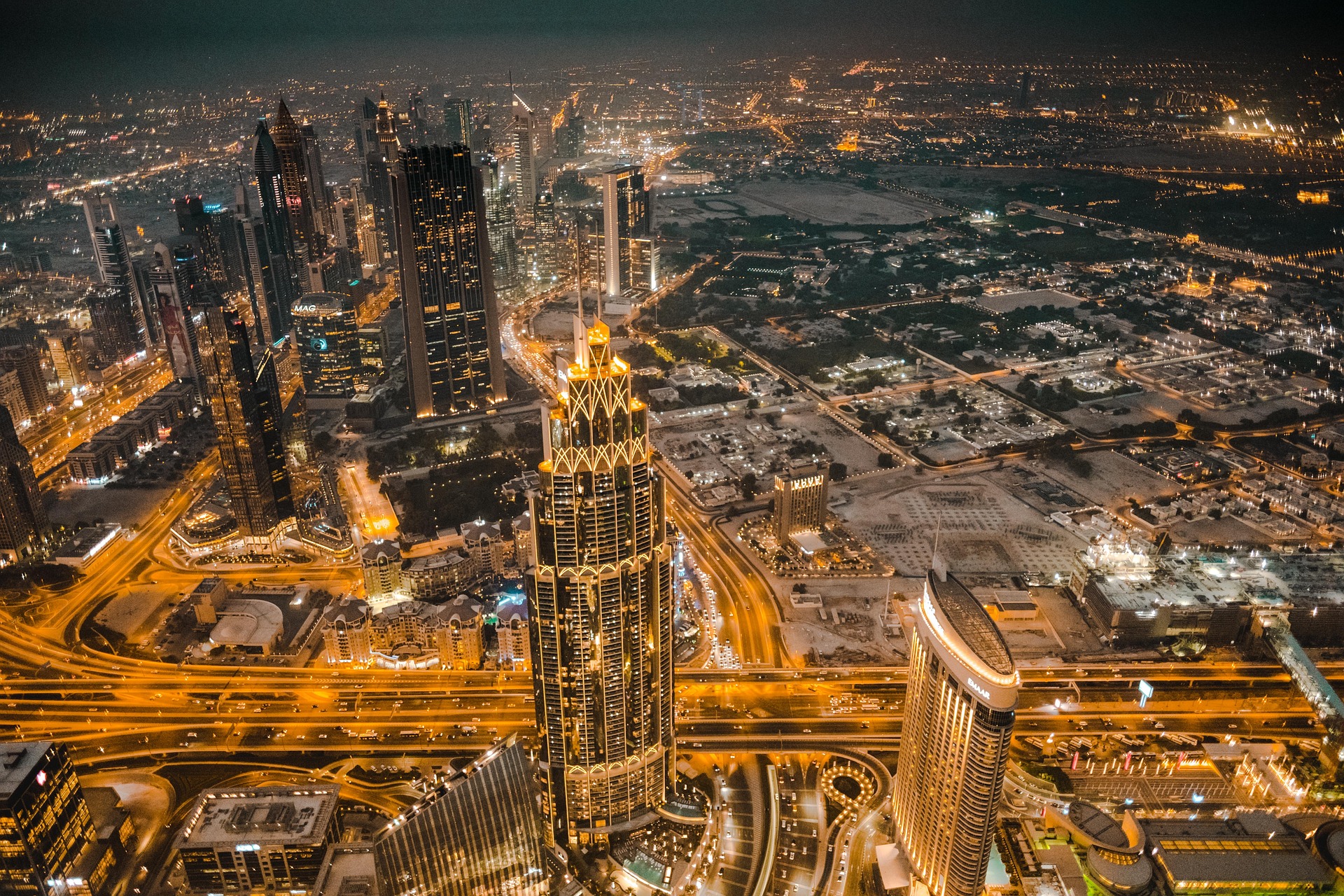
Over the past week, the military escalation in the Middle East has triggered an unexpected phenomenon, revealing what few were willing to see: Dubai was built on shifting sands. The United Arab Emirates, long convinced they had created a sanctuary of stability in the heart of a troubled region, now find themselves exposed to the storm, increasingly perceiving the Emirati El Dorado as a mirage vulnerable to all the geopolitical winds of the region. The war expanding between Iran, Israel, and several regional actors is directly striking one of the pillars of their model: the image of a neutral, secure, and prosperous space. This reversal carries a cruel irony for a power that, for more than a decade, has actively contributed to reshaping the political order of the Arab world.
Dubai, the Gulf’s “Switzerland,” suddenly vulnerable
For years, the United Arab Emirates carefully cultivated a well-crafted image: that of a Middle Eastern Switzerland. Dubai was its most striking showcase. A global trade platform, financial and logistics hub, tourist and tax haven, the city embodied the idea of a Middle East disconnected from regional turmoil. It attracted thousands of expatriates from many countries, convinced that life was better in the sands of the Gulf than elsewhere.
Yet this model rested on a delicate balance. Dubai thrived by trading with everyone, including Iran, a significant share of whose foreign trade unofficially passed through the emirate. Tens of thousands of Iranians lived and worked there, turning the city into a discreet crossroads between Tehran and the global economy. In short, prosperity without full sovereignty.
But this balancing strategy gradually became more complex. The 2020 Abraham Accords formalized the spectacular rapprochement between the United Arab Emirates and Israel, opening unprecedented security and technological cooperation, while also making the federation a prime target for the enemies of the Jewish state. By moving closer to Israel while remaining an indirect commercial partner of Iran, Abu Dhabi believed it could play on multiple fronts. That no longer works.
Recent events have revealed the limits of this posture. When war expands, grey zones disappear. The UAE’s strategic installations and economic infrastructure suddenly become potential targets. The country that presented itself as a sanctuary of stability now discovers that its prosperity depends on a region that is catching fire. In the glass towers of Dubai as well as in the offices of international investors, anxiety is palpable. If the image of a safe oasis were to crack, the entire Emirati model could falter. A reputation built over years is already beginning to collapse.
A decade of Arab counter-revolution
This reversal also points to another aspect of UAE policy, far less highlighted in its official communication: its central role in the Arab counter-revolution since the uprisings of 2011.
From the earliest months of the Arab Spring, Abu Dhabi perceived popular movements as an existential threat. For the Emirati monarchy, the emergence of democratic regimes in the Arab world risked empowering political forces considered hostile, particularly Islamist movements.
The UAE therefore deployed an active strategy to prevent these political transitions from consolidating. In Egypt, it supported financially and politically the overthrow of the elected government in 2013. In Libya, it backed militarily the forces of Field Marshal Khalifa Haftar against authorities recognized by the United Nations. In Yemen, it played a major role in the war against the Houthis while supporting local militias that further fragmented the country.
Sudan offers another revealing example. The UAE supported various military actors during the chaotic transition following the fall of Omar al-Bashir, while Dubai became a hub for Sudanese gold trade, often illegally extracted during wartime, opaque and closely linked to local power networks controlled by actors accused of war crimes.
In Syria, despite the civil war, Abu Dhabi gradually reopened channels with Bashar al-Assad’s regime, illustrating a pragmatic diplomacy in which authoritarian stability is consistently preferred over political uncertainty.
Across these different theaters—Egypt, Libya, Yemen, Sudan, Syria—the UAE has assumed a major role in structuring a counter-insurrectional regional order, combining financial influence, military support, reliance on private security companies, and active diplomacy. This policy long appeared effective. It is striking that the UAE was not targeted earlier given the scale of its widespread interventions. It allowed the Emirates to project influence far beyond their demographic and territorial weight, becoming one of the most influential actors in the Arab world. But it also contributed to multiplying tensions in an already fragile region.
Mohammed bin Zayed confronted with reality
Today, this strategy is colliding with a harsher reality. The President of the United Arab Emirates, Mohammed bin Zayed, now faces a regional crisis largely beyond his country’s control. The UAE built its power on a simple equation: economic strength, diplomatic influence, and limited but effective security projection. A major regional war now directly threatens the first two pillars of this model.
If military tensions intensify and Gulf infrastructure becomes a recurring target, Dubai could lose what makes it unique: its reputation as a stable refuge in an unstable Middle East. Market panic, capital flight, or a collapse in tourism would all be dangerous signals for an economy deeply dependent on international confidence.
In this context, Abu Dhabi can rely on several partners, particularly its Western allies. France, bound to the UAE by close military and strategic cooperation, has already reaffirmed its support in the face of regional threats. But these guarantees are not enough to dispel growing doubts. The current crisis exposes the contradictions of a strategy that sought to make the UAE both a major political actor in the Middle East and a neutral economic platform open to all. For Mohammed bin Zayed, the question is now unavoidable: can one sustainably reshape the political order of the region while expecting to remain shielded from its shocks?