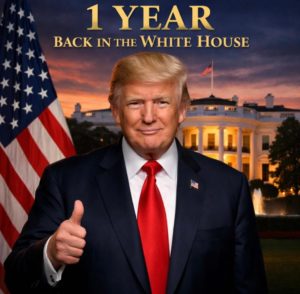
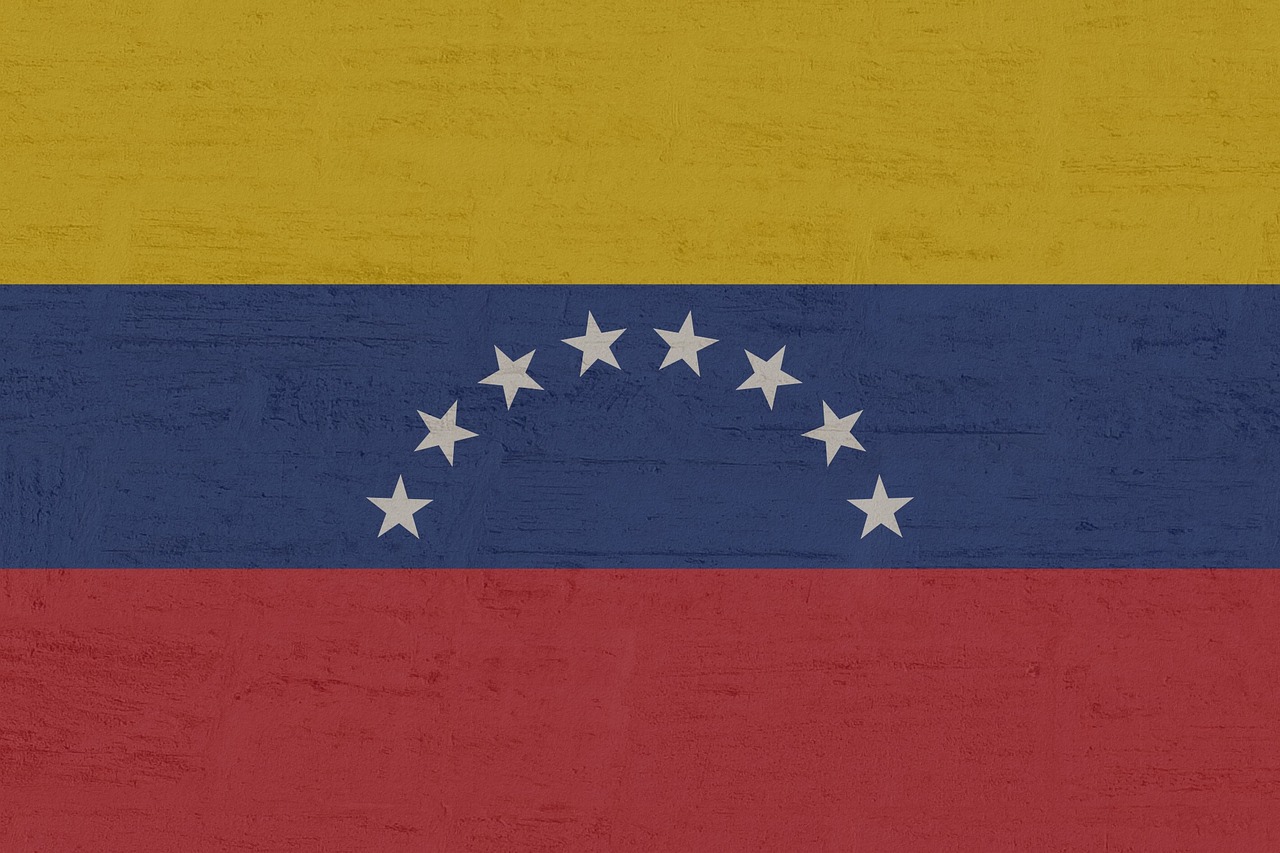
For nearly a year now, since Donald Trump’s return to the White House, the dismantling of the international system born in 1945 has been accelerating at breakneck speed. The recent overthrow of Venezuelan dictator Nicolás Maduro by the United States sets the tone even more clearly. Acting without any mandate from the United Nations, Trump unilaterally decided to remove a leader who not only undermined U.S. influence on the continent but also destabilized the country through massive migration flows and drug trafficking networks extending from Colombia to North America. Political overthrow and “regime change” strategies are nothing new for the United States in what it has always considered its backyard: Latin America. Russia and China openly dream of doing the same within their own spheres of influence. One may regret this, of course, and denounce an obvious violation of international law. But was Caracas, already under international sanctions, truly the first to respect it?
Faced with the centrifugal forces pushing major regional powers to take control of their own destinies—at the expense of others and freed from the constraints of multilateralism—Europe must wake up and stop behaving solely as the world’s moral guardian. We may not know exactly where this path leads, but burying our heads in the sand out of fear of the leap into the unknown is no longer an option. As geopolitical power politics return and international relations take on the characteristics of a strategic jungle, Europe cannot afford to remain a mere spectator of the world to come, lamenting this revolutionary geopolitical shift from within parliamentary arenas, only to end up completely satellized in the emerging global order. There is an urgent need to speak the same language as those who challenge us—or seek our decline—if we are to resist and avoid disappearance.
Venezuela as a Symptom of a Strategic Shift
The capture of Nicolás Maduro by the United States cannot be read as a simple episode of Latin American politics or as a one-off counter-narcotics operation. It is part of a much deeper reconfiguration of the international order. As analyst Alexandre del Valle has pointed out, we are witnessing the gradual emergence of a “new Yalta,” in which major powers redefine their respective spheres of influence at the expense of the universalist principles that structured the postwar order. From this perspective, the U.S. operation in Venezuela is less an accidental violation of international law than a deliberate act of power, consistent with a reactivated and expanded Monroe Doctrine. Washington is signaling its intention to regain strategic control of its hemisphere, secure its energy flows, reduce Chinese and Russian influence in Latin America, and stabilize its immediate environment according to its own criteria. Greenland could well be the next target, as Trump seemingly struggles to understand why Denmark should continue to govern an island he considers part of America’s sphere of influence. The message is clear: the era of multilateral regulation is giving way to unilateral delineation of security spaces. Law yields to power politics. Each power is rebuilding territorial buffers in response to resurging threats.
The Powerlessness of Multilateralism and the Normalization of Violations
In the face of this shift, the United Nations appears sidelined, if not irrelevant. Venezuela was already under sanctions, surveillance, and repeated condemnations. Yet none of these measures produced any real coercive effect. Multilateralism has proven incapable of acting against regimes deemed deviant, authoritarian, or destabilizing, beyond issuing declarations devoid of tangible impact. This strategic vacuum is now being filled by the powers themselves, reclaiming control within their respective regions. Russia is redrawing its security boundaries in Ukraine. China is gradually asserting its own around Taiwan. Turkey is expanding its military and political influence in Syria, the Caucasus, and the Eastern Mediterranean. Saudi Arabia projects its power in Yemen and beyond. The United States is reinvesting in Latin America. This is not an anomaly; it is the new norm. We are entering a world where sovereignty is no longer an absolute principle but a relative variable, subordinate to the balance of power.
Europe and Its Own Strategic Naivety
In this world, which has once again become brutally Hobbesian—a chaotic state of nature—Europe persists in thinking as if international law alone could guarantee its security. It invokes norms that few still apply, defends rules that major powers have already moved beyond, and retreats into a moral posture that produces no real strategic effect. This naivety is precisely what makes Europe vulnerable. While others cross the Rubicon of power politics, Europe continues to believe in a jungle regulated by conventions. But the jungle recognizes only deterrence, influence, projection, fear, and threats. The overthrow of Maduro is not merely a Latin American affair. It is a signal sent to the entire world: security now takes precedence over norms, and power over multilateral negotiation, justice, and even democracy. We are entering an era of sanitary cordons, military and ideological buffer zones, spheres of influence, and gray areas. The question is no longer whether this world is desirable, just, or preventable—but whether it is real. And it already is.