Those who constantly accuse Donald Trump of spreading chaos wherever he goes should at least welcome the fact that the American president is thinking twice before intervening in Iran. One does not hear much from the left in the press supporting the current movement, which is both historic and unprecedented against the mullahcracy. And yet this is precisely the moment when reflection is needed before doing something irreversible. Contemporary history has shown this with almost scientific consistency: the same causes produce the same effects. Overthrowing a regime by force and attempting to impose a new one from the outside does not work — politically, socially or strategically. “Regime change,” presented as a tool of liberation, has almost always produced the opposite of what it promised: chaos, civil wars, failed states and endless internal violence. This is the lesson Trump now seems to be drawing from, not out of moral hesitation but out of strategic lucidity.
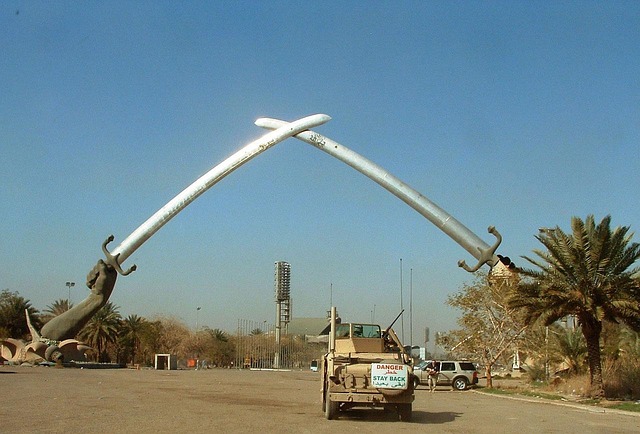
The examples are numerous. In Iraq, the fall of Saddam Hussein destroyed the state apparatus without rebuilding it, opening the way to twenty years of sectarian violence, the rise of ISIS — whose ranks were quickly filled by former officers of the national army left unemployed after being purged by the Americans — and chronic instability. In Libya, the removal of Gaddafi created a lasting power vacuum fragmented among militias, foreign interference and trafficking networks, with two rival governments unable to reconcile. In Syria, the partial dismantling of the state led to a humanitarian and geopolitical catastrophe whose repercussions are still being felt. In Afghanistan, twenty years of Western political engineering and billions spent trying to build a viable state collapsed in a matter of days; the Taliban, who had been expelled, returned to Kabul stronger than ever in 2021. Even in Latin America during the Cold War, externally imposed regime changes rarely produced stable democracies.
The Middle East is not an institutional blank slate where one can replace a government as one would change a management team. It is a mosaic of intertwined religious, ethnic, tribal, ideological and social minorities. Destroying the top of a regime without controlling how this mosaic recomposes almost always releases uncontrollable centrifugal forces. That is what still threatens Syria when a truly new power eventually emerges from the ballot box. The states concerned then become arenas of competition between militias, foreign powers and predatory economies.
This is why strategic prudence now outweighs the illusion of a clean slate — and Trump knows this in the case of Iran. The question is no longer simply whether a regime should fall, but what could reasonably replace it without producing even more violence. Experience shows that the total destruction of the state is almost always more dangerous than the partial survival of an imperfect apparatus. A transition does not happen in a vacuum: it requires structures capable of running the country the next day, ensuring minimum security, maintaining essential services and preventing fragmentation. What, for example, would Reza Pahlavi do if he returned to the country, restored the monarchy, and had to govern with the existing state and its civil servants?
It is within this logic that a still imperfect but perhaps more realistic intermediate path is emerging: not a brutal regime change, but a gradual process of transformation, sometimes described as “untopping,” which consists in removing the political top while preserving most of the state apparatus. Trump did something along these lines in Venezuela by capturing only Maduro and negotiating with the regime of the vice president in place. The logic is simple: preserve what allows a society to hold together while gradually opening the political space. This is often the only option that avoids chaos.
The great Western illusion of regime change is the belief that one can impose a stable political order from the outside on complex societies. Thirty years of experience have shown that this belief produces catastrophes more often than democracies. In light of this reality, restraint is not weakness. It may well be a late form of strategic wisdom. Trump has little to gain and much to lose by getting bogged down there.