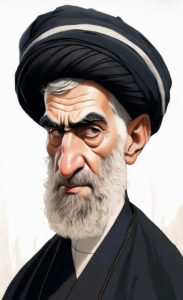
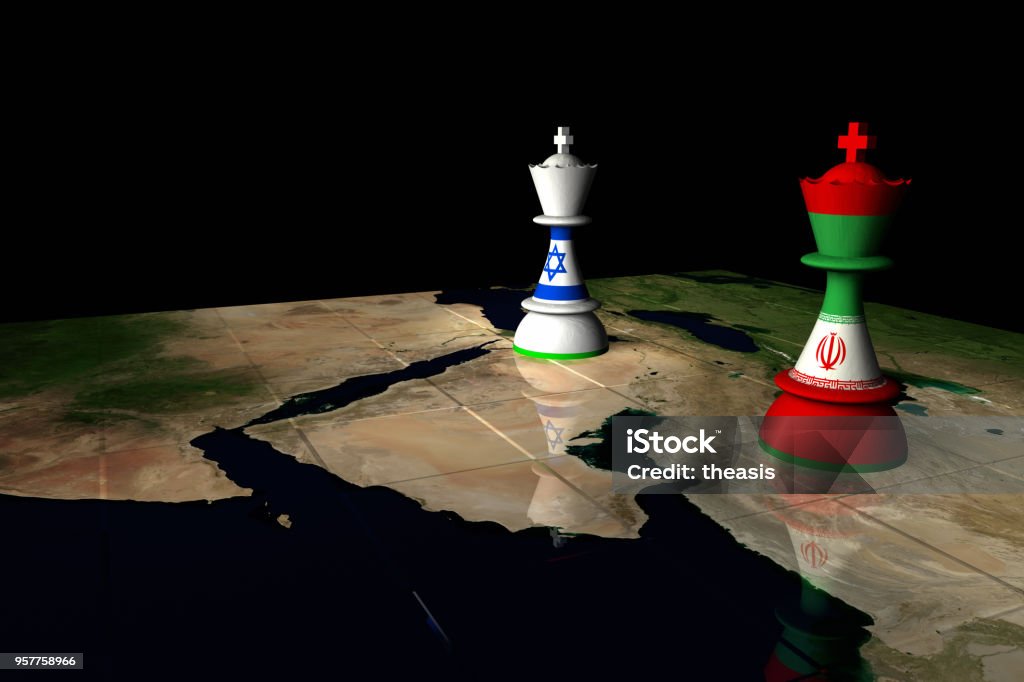
For several weeks now, Donald Trump has once again been accused by parts of Western public opinion and by Iranian opposition figures in exile of blowing hot and cold and, indirectly, of seeking to save the regime of the mullahs. His stated willingness to negotiate with Tehran without attempting to provoke a brutal overthrow of power is seen as a betrayal of Iran’s democratic aspirations. He negotiates, but nothing is very clear. This reading, however, is far too simplistic, because everyone knows it: the Middle East is a game of dominoes. And those who today call on the United States to bomb Iran in order to topple the regime are often the very same people who have denounced America’s all-out interventionism around the world and the consequences we have witnessed.
Above all, this accusation against Trump rests on a dangerous illusion: the idea that there might exist a clean, rapid, and morally satisfying solution to the Iranian question. In the Middle East, however, miracle solutions do not exist—certainly even less so than elsewhere. For twenty years, the United States and its allies have accumulated examples of the failures of externally imposed regime change. Iraq, Libya, and Afghanistan have shown that bringing down an authoritarian power does not mechanically produce democracy, but very often a strategic vacuum, the collapse of the old state, militias, civil wars, and uncontrollable dynamics. Iran is not a small, isolated dictatorship. It is an ancient state, endowed with an administration, a dense security apparatus, strong nationalism, and deeply rooted ideological power. Imagining that its collapse would naturally lead to a democratic regime reflects an optimism bordering on strategic irresponsibility.
It is on this ground that Trump appears, paradoxically, more clear-eyed than many of his critics. He does not believe in democratization by force. Admittedly, he is probably more interested in the economic benefits he might derive from the end of the Islamic Republic than in the fate of Iranians—but the two can be linked. As a result, it seems in recent days that for Washington the Iranian risk is not primarily the theocratic nature of the regime, but its ability to become a military nuclear power. For two decades, the American obsession has remained the same: preventing Iran from obtaining the bomb. The rest is secondary. He may also be reviving the nuclear issue to divert attention away from regime change.
When Trump tore up Barack Obama’s nuclear deal in 2016, it was not out of a taste for conflict, but because he believed the agreement was too permissive. It allowed Iran to retain its infrastructure, enrich uranium, and play for time. For Trump, it was a bad deal. Today, what he seems to be negotiating with Tehran is a brutal but clear equation: by negotiating over the nuclear issue with those in power, he tacitly encourages the regime’s survival in exchange for a credible renunciation of nuclear weapons. It is a bargain, not a vision.
At bottom, however, it is possible that Trump—like many international actors—simply does not really know what to do. Who has the perfect solution for Iran? Those who call for regime change in the name of human rights often refuse to look at what comes next. Their logic is simple: bring down the dictatorship, and “after me, the deluge.” Yet recent history shows that the “after” can be far worse. Conversely, those who argue for stability over chaos are immediately accused of abandoning the Iranian people. In this dilemma, there is no miracle solution.
This unease also runs through U.S. allies, including Israel and several Arab countries. All know that a massive military operation against Iran carries an enormous risk of uncontrollable escalation. A regime that has nothing left to lose, that knows it is doomed, can become infinitely more dangerous. It could strike Israel, but also the Arab countries that have abandoned it, such as Jordan or certain Gulf states that might ultimately open their airspace or cooperate with the West via American bases on their soil. Above all, it could turn with extreme violence against its own population, transforming Iran into an internal battlefield. It is this fear of a “last-ditch” scenario that weighs heavily in American and Israeli calculations. In both cases, it comes back to the same issue: relying on the United States—and on it alone—to do the “dirty work,” only to criticize it harshly afterward in the event of war.
In this context, Trump is not playing a grand moral game. He is playing a game of risk minimization. This places him in direct opposition to the legitimate aspirations of Iranians for freedom. But it also reflects a brutal reality: the foreign policy of great powers is not a contest of virtue; it is the management of chaos. The Iranian tragedy lies precisely here. The regime wants to survive. The United States wants to prevent the bomb. Iranians want to change the system. And these three objectives are now incompatible. Trump is trying to patch together an unstable balance between them. He may buy time. But he cannot, on his own, resolve this fundamental contradiction without all the collateral damage described above.