Multilateralism was born in a world where war and peace were primarily the responsibility of states. It was built on the assumption that sovereign, identifiable and rational actors, endowed with territory and the monopoly of legitimate violence, could negotiate, compromise and constrain one another in order to preserve peace. For decades, this model worked. Even the most dangerous international crises unfolded within relatively clear power balances between state actors. Multilateral negotiation made it possible to transform these power relations into political compromises, sometimes fragile, but often durable.
The Cold War constituted the paradoxical golden age of this system. Beneath bipolar rivalry and nuclear deterrence, the rules of the game were well known. Adversaries recognized one another as responsible states, endowed with legible strategic interests and a minimum obligation of restraint. International institutions were not merely symbolic arenas or rubber-stamp bodies. They played a real role in containing violence and managing escalation.
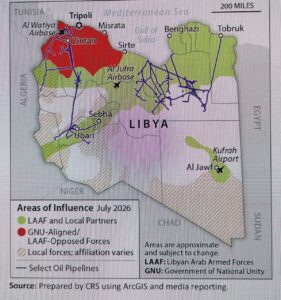
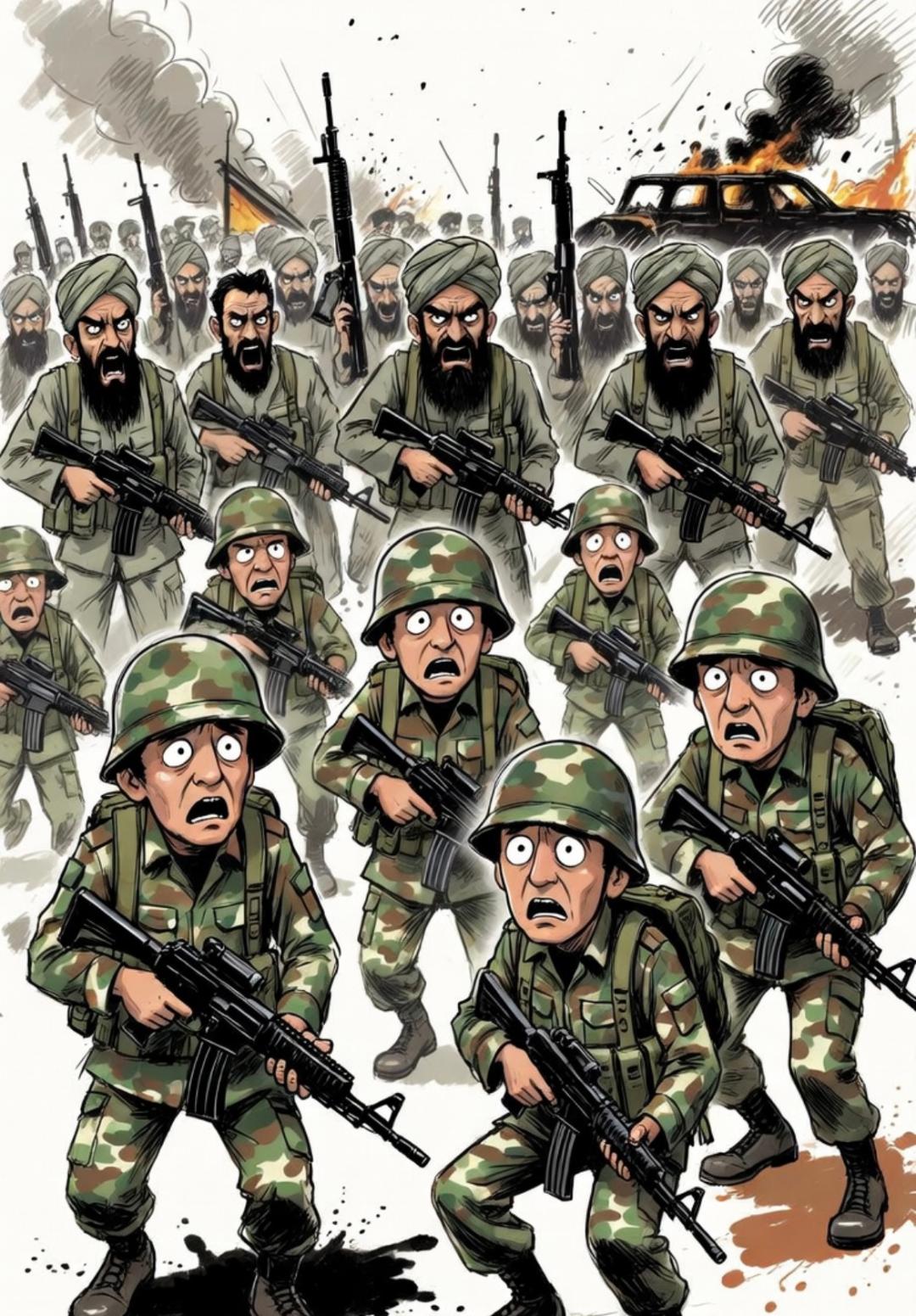
That world has disappeared. Contemporary conflicts are no longer primarily structured around inter-state confrontations, but by the proliferation of armed non-state actors that escape the very foundations of multilateralism. Hybrid militias, paramilitary groups, terrorist organizations and transnational criminal networks now form the backbone of many wars. These actors possess neither stabilized borders, nor international legal responsibility, nor any real interest in diplomatic recognition. They do not seek peace in the classical sense, but duration, expansion and control over territories, resources and populations.
In this context, multilateralism appears structurally ill-suited. It continues to operate on the assumption of rational interlocutors capable of respecting agreements, even though many armed actors thrive precisely on the permanent violation of rules. For them, peace is not a strategic objective, but a tactical variable, useful only when it allows regrouping, rearmament or a shift in the balance of power.
The emergence of transnational groups such as al-Qaeda and later ISIS marked a decisive rupture. These organizations are not defined by a national territory to be stabilized, but by an ideology, a capacity for projection and a logic of global confrontation with states and their sovereignty. They recognize no legitimacy in international institutions and participate in multilateral processes only as security targets. Faced with them, the classic tools of diplomacy become largely ineffective.
This transformation makes peace negotiations infinitely more complex. Multilateral processes presuppose reciprocal commitments, guarantees and a minimum degree of political continuity. Yet non-state armed groups are fragmented, fluid, riddled with internal rivalries and financed through opaque war economies. Signing an agreement with one faction guarantees neither its implementation, nor its durability, nor even its recognition by all fighters on the ground. Hamas in Gaza or the Rapid Support Forces in Sudan are obvious illustrations of this reality.
It is within this context that Donald Trump’s diplomacy must be understood, often caricatured but in fact revealing of this profound mutation. Trump neither believes in classical multilateralism nor in large international conferences. He considers these frameworks as producers of norms and declarations, but rarely of results. His diplomacy favors restricted, personalized and sometimes deliberately opaque channels, where power relations are assumed rather than concealed behind procedures.
Powerful states increasingly rely on parallel methods, atypical functioning and more personalized negotiations. The era of grand diplomatic arenas is fading. Where, moreover, have the United Nations been for the past two or three years? Trump’s use of envoys such as Steve Witkoff and Jared Kushner on the Ukrainian and Middle Eastern files, or Marco Rubio on regional and security balances, fits squarely within this logic. The objective is no longer to negotiate comprehensive, legally stabilized agreements, but to extract partial, targeted arrangements based on immediate interests. These agreements are fragile. This envoy-driven diplomacy aims less at lasting peace than at risk reduction, temporary de-escalation or a minimalist form of “peace.”
If negotiations are currently stalling, this is not merely because of Trump’s personality or methods. It is because the conflicts themselves have become structurally difficult to negotiate. In Ukraine, the war goes far beyond a confrontation between two states. It involves existential questions of political survival, strategic credibility, military alliances and global power balances. In the Middle East, states no longer fully control the armed actors operating on their territory or in their name. Any negotiation is therefore exposed to sabotage by actors who have no interest in its success. And they are numerous: Hamas, Hezbollah, the Houthis. This is why Washington also relies on mediators who understand their “world” and act as transmission belts between American demands and those of their adversaries. Mediating power thus becomes a fundamental actor in the new international relations of a post-multilateral world.
Multilateralism nevertheless continues to function, or at least to pretend that it can, as if a rapid return to a stable state-centered order were possible. Yet many current conflicts are long-term in nature. They are characterized by partial regulation of violence rather than its resolution. Peace becomes fragmented, local and provisional. It is no longer the product of a grand international agreement, but of precarious arrangements between actors whose interests are fundamentally incompatible.
It would be wrong to conclude that diplomacy itself has ended, since all these processes are, in fact, negotiations. What is collapsing, however, is the illusion that a form of multilateralism designed for the inter-state wars of the twentieth century can suffice to manage conflicts dominated by non-state and transnational actors. As long as this transformation is not fully integrated, peace processes will continue to exist formally, while remaining largely disconnected from the real dynamics of war.
The question is therefore no longer how to restore a multilateralism inherited from another era, but how to rethink international negotiation in a world where violence is no longer exercised solely by states, where the multiplication of actors operating outside national frameworks has produced unprecedented levels of power and often of disruption, and where peace is no longer negotiated exclusively between capitals, but within fragmented, durable and deeply asymmetric systems of war.