It is often said that the American presidents who have entered history are those who succeeded in expanding U.S. territory. From Thomas Jefferson with the Louisiana Purchase to William McKinley after the Spanish-American War, territorial expansion has long been seen as a marker of power and strategic vision. Even when expansion was not military, as under Andrew Johnson with the acquisition of Alaska, it reflected an ability to project the nation’s future. In the United States, history remembers those who reshaped the map as much as those who governed. Although a large segment of the American public remains hostile to Donald Trump’s ambition to seize Greenland, history may ultimately vindicate him, regardless of the European sovereignty violations such a move would entail.
The recent tensions between Trump and Emmanuel Macron on this issue go far beyond a clash of egos. More than a diplomatic skirmish, the episode highlights a confrontation between two worldviews. On one side stands an America that fully embraces power politics and the policy of the accomplished fact. On the other, a Europe that continues to cling to international law and the principles of sovereignty, often without possessing the strategic tools necessary to enforce them.
In recent weeks, the White House has visibly accelerated its approach to the Greenland issue. Thinly veiled threats of appropriation, repeated provocations about a possible purchase of the island, and insistent reminders of America’s strategic interest in the Arctic are anything but improvised. Greenland has long occupied a place in Trump’s strategic imagination. What has changed is his determination to create an irreversible strategic reality, forcing allies and partners to adjust once it is in place.
At the same time, one element has been largely underestimated in public debate. Europeans have conducted their first military exercises in Greenland, joining an American presence that is longstanding, continuous, and structural. This coincidence is far from trivial. It reveals that Greenland has not been a truly neutral space for a long time, but rather a territory where power relations have been gradually materializing. The central question is therefore no longer merely one of formal sovereignty, but of real legitimacy. Does Denmark derive legitimacy from history and law? Do Greenlanders derive it from the principle of self-determination? Do the United States derive it from their longstanding strategic presence and legal agreements? Does Europe claim it in the name of a belatedly asserted collective sovereignty? And what about NATO, of which all actors are members—what role does it truly play? To understand what is unfolding, one must analyze the mechanics of the accomplished fact.
A Territory Under Guardianship: The Ambiguous Legacy of Danish Rule
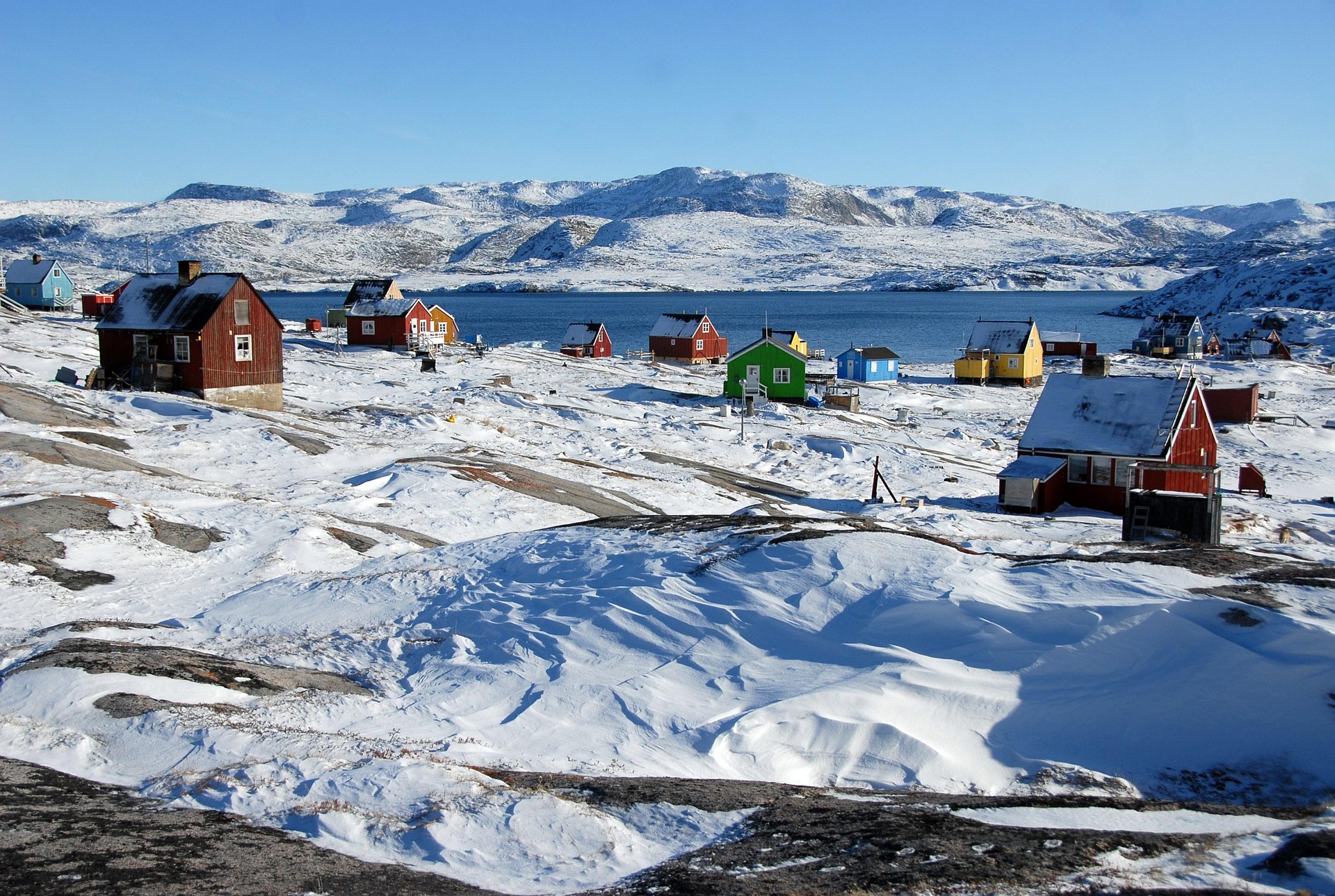
Greenland’s anchoring within the Danish sphere dates back to the eighteenth century, when the Danish-Norwegian crown gradually imposed its authority over this vast Arctic territory. Long administered as a peripheral possession, Greenland was formally integrated into the Danish state only in 1953. This integration never rested on full consent from the local population. While Danish authorities accompanied their administration with public investment and a relatively protective social framework, they also exercised tight political and cultural control, often perceived by Greenlanders as intrusive and condescending.
This imbalance hardened into a lasting fracture in the decades that followed. From the 1960s, and especially during the 1970s, Danish authorities implemented highly coercive demographic policies, including forced sterilization campaigns targeting Greenlandic women. These measures, now well documented by numerous investigations, left a deep scar on Greenlandic society and fueled enduring distrust toward Copenhagen. They constitute one of the historical foundations of today’s independence movement.
Institutional reforms at the beginning of the twenty-first century, particularly the expansion of autonomy in 2009, strengthened local powers and formally recognized the possibility of eventual independence through a referendum. In practice, however, this prospect remains fragile. Greenland’s economy is still heavily dependent on financial transfers from Denmark, severely limiting its real political room for maneuver. Independence forces do not seek a change of tutelage, but complete emancipation, both from Copenhagen and Washington. Their horizon is national rather than geopolitical. Yet this structural vulnerability creates a strategic vacuum, one in which powers capable of gradually imposing their presence find fertile ground.
The 1951 Agreement: The Legal Matrix of the American Accomplished Fact
From the standpoint of classical international law, Greenland unquestionably falls under the sovereignty of the Kingdom of Denmark. Any imposed takeover by a third state would constitute a direct violation of the fundamental principles of the international order, particularly the inviolability of borders and the right of peoples to self-determination. It is on this legal basis that Donald Trump’s statements were widely condemned by Europeans as irresponsible and incompatible with existing legal frameworks.
This perspective, however, captures only part of the reality. It tends to obscure a decisive factor that has rarely been highlighted in public debate. Since World War II, the United States has maintained a permanent presence in Greenland within a fully legal framework. The military cooperation agreement signed in 1951 between Denmark and Washington grants the United States the right to establish and maintain military installations on the island, including the Thule Air Base, now integrated into U.S. strategic surveillance and missile defense systems.
Over time, this agreement has created an exceptional operating space for the United States. For more than seven decades, it has allowed Washington to expand its military and logistical capabilities in Greenland without formally challenging Danish sovereignty. No legal provision prohibits an extension of this presence, provided Copenhagen consents. And Copenhagen’s consent is, of course, essential. American influence on the island has thus been built continuously, within the bounds of law, and deeply embedded in the Arctic strategic landscape.
It is precisely on this foundation that Donald Trump’s approach is built. He is less interested in violating international law than in transforming a de facto situation into explicit political recognition. In his reading, shared by part of his business-oriented entourage, Greenland already belongs to the vital space of American security. From this perspective, it would be preferable to openly acknowledge this reality before other powers, notably Russia or China, manage to establish themselves through indirect economic, financial, or technological mechanisms, as the Arctic grows in strategic importance.
Greenland as a Laboratory of the Accomplished Fact
Several outcomes now appear possible for Greenland’s future, but not all carry the same level of strategic stability. The first, often portrayed as inconceivable but in reality the most plausible in the long term, would involve a large-scale financial agreement through which Denmark would accept a transfer of sovereignty in exchange for a settlement deemed economically decisive. Such a move would be politically sensitive, but it would offer immediate clarification of the island’s status. It could be justified by arguments that are difficult to contest: securing the Arctic amid newly opened shipping routes caused by climate change, controlling critical resources such as rare earths, and ensuring durable protection of the territory in an increasingly unstable strategic environment. In this light, a purchase would appear less as a provocation than as an act of assumed realpolitik between Western allies.
Conversely, a prolonged refusal would open the door to a gradual deterioration of transatlantic relations, possibly even a fundamental challenge to NATO, which Trump does not particularly value in any case. Without escalating into armed conflict, tensions could crystallize into a latent economic, legal, and strategic confrontation. A proliferation of competing military exercises, cross-pressures in diplomacy, industrial rivalries over Arctic resource exploitation, and persistent disagreements over the governance of northern sea routes would turn Greenland into a permanent zone of friction between partners supposedly sharing the same interests. Such a trajectory would weaken Western cohesion and seriously undermine NATO’s credibility.
The third option, repeatedly invoked by Donald Trump, rests on long-term reasoning. As accelerating ice melt renders the Arctic fully navigable and economically exploitable, Greenland will become a major strategic anchor point. Within ten to fifteen years, the island could fall under indirect economic, technological, or financial influence from Russia or China. In this interpretation, American activism is not a conquest strategy but a form of preventive locking. The goal is to occupy the space before others do, without resorting to open military means.
Greenland is therefore neither a blank slate nor a simple interchangeable pawn on the global chessboard. It lies at the intersection of a painful colonial history, a deliberately ambiguous legal framework, and an intensifying strategic competition among major world powers. Once again, Donald Trump’s statements shock by their bluntness, but they primarily expose the growing limits of international law and its enforcement. In the world taking shape, sovereignty proclaimed without real power of projection becomes fragile. The Greenland issue has become a textbook case of the policy of the accomplished fact. The central question in the months ahead is whether Europeans possess anything beyond principles with which to respond. If not, it will be other dominant powers that set the rules of the twenty-first century on the world’s richest and most coveted territories.