Just a few days ago, Donald Trump appointed a new envoy for Greenland tasked with exploring the ongoing dossier: Jeff Landry, the current governor of Louisiana, has been mandated to conduct an exploratory and political mission on the ground. The choice is highly symbolic, as it directly echoes the history of American territorial expansion and the sale of Louisiana by France. It definitively illustrates Trump’s determination to place the Greenland issue within an assumed strategic continuity. The dice increasingly appear to be cast for the island’s future.
Indeed, Donald Trump’s recent announcement that he is seriously considering a proposal to purchase Greenland immediately triggered a wave of mockery, indignation, and disbelief. Many saw it as yet another provocation, a media stunt designed to divert attention or appeal to an electorate fond of symbols of power. This reading is largely insufficient. The idea follows a clear logic and could actually avoid a military showdown that would otherwise force Copenhagen—and Europeans more broadly—to yield. Behind this shocking proposal lies a genuine strategic coherence, rooted in a worldview where territorial, energy, and security power dynamics once again prevail over the old normative frameworks inherited from the postwar era.
Greenland, a strategic blind spot turned American obsession
Since returning to the White House, Trump has acted according to a clear guiding principle: securing an expanded American space, reconstituting clearly defined spheres of influence, and preventing any lasting presence of rival powers in what he considers the immediate strategic environment of the United States. This, of course, refers to Russia and China, both of which have long set their sights on Greenland. The island—long perceived as a frozen periphery devoid of major political stakes—has become, due to its location and resources, a strategic nerve center.
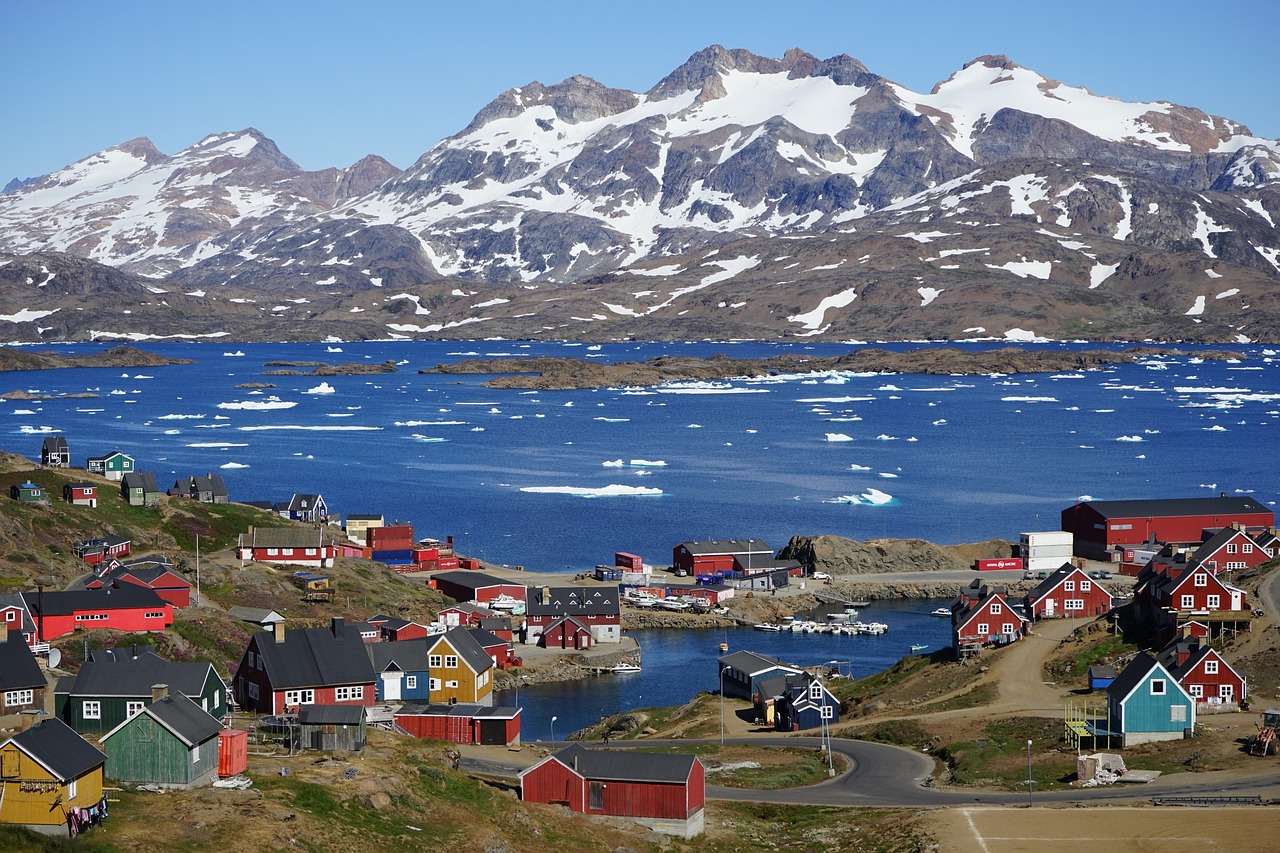
Donald Trump’s obsession with Greenland is therefore neither a whim nor folklore. The island concentrates an accumulation of critical issues that make it one of the most strategic territories of the 21st century. Its geographic position at the heart of the Arctic makes it a potential control point for new polar maritime routes, which are expected to expand with climate change. It also represents an ideal platform for military surveillance of the North Atlantic and Arctic airspace.
Added to this are considerable resources: rare earth elements essential to digital technologies and artificial intelligence, strategic minerals, potential hydrocarbons, and largely untapped energy reserves. In a world where control over supply chains has become a matter of national security, Greenland appears as a major strategic asset.
In Trump’s thinking, the logic is straightforward: the United States cannot accept that China or Russia exploit the vulnerabilities of an under-administered and under-protected territory to establish a lasting presence there. Denmark, despite being a stable and allied state, lacks the military means, financial capacity, and strategic depth required to defend alone an island of more than two million square kilometers. From Washington’s perspective, maintaining the status quo amounts to creating a dangerous strategic vacuum.
A legal shock for Europe undermined by a potential sale
Up until January 7, 2026, Donald Trump carefully maintained ambiguity. He never mentioned the use of force or unilateral annexation. He spoke instead of negotiation, purchase, and transaction. This approach—deliberately destabilizing for Europeans—challenges a fundamental taboo: the inviolability of borders in peacetime. For the European Union, the shock is profound, not only because Greenland legally falls under the sovereignty of a European state, but also because the proposal exposes the continent’s strategic weakness on its own peripheries.
In Copenhagen, the official line has remained firm for months: Greenland is not for sale. But behind the scenes, concern is palpable. For Trump, everything can be sold and bought. Denmark knows that a frontal political confrontation with Washington would be extremely costly, both economically and in terms of security. Reactions within Greenland itself are far from uniform. Part of the population sees the proposal as an opportunity for massive economic development, structural investment, and increased autonomy—provided the process is legal, transparent, and accompanied by substantial guarantees for their security.
Buying rather than coercing: the Trump method
Trump no longer speaks directly of conquest, but of purchase. He places himself within a long American tradition based on transaction rather than forced occupation. In reality, this logic rests on historically meaningful precedents—and this is where he could once again leave his mark on history.
The sale of Louisiana by Napoleon Bonaparte in 1803 was, at the time, experienced in France as a strategic humiliation. Yet it occurred without conflict and enabled the United States to become a continental power. A few decades later, the purchase of Alaska from Russia was ridiculed as a geographic folly, only to prove one of the most profitable geopolitical moves in modern history. Trump knows these preced